

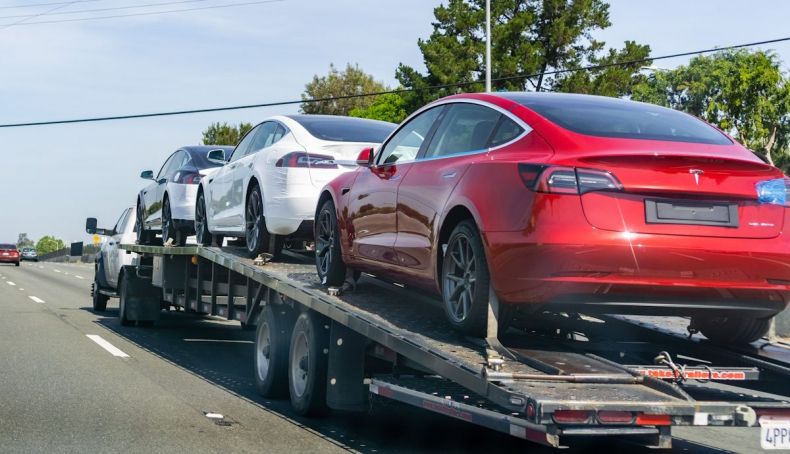
New defects detected by the TÜV Association reveal yet another discouraging result for Tesla in mandatory vehicle inspections. This time, the Model Y is the car with the most problems.
There is no longer any doubt: statistically, some Tesla cars are now proving to be far more problematic during vehicle inspections (MOTs) than other similar electric vehicles on the market. The results of the latest mandatory tests carried out in Germany reveal a worrying safety situation. The analysis reports are that conclusive.
The Tesla Model Y, last among vehicles up to 3 years old
While the technical condition of the entire vehicle fleet shows a clear downward trend, and the defect rate increases as car electronics advance and more stringent vehicle inspections are introduced, the latest results for the Tesla Model Y are particularly striking. This electric vehicle ranks last in the category of vehicles two to three years old… and it just so happens that it’s one of the best-selling models in Europe.
There have been reports in recent years of defects also found in the Tesla Model 3, a car technically very similar to the Model Y, which, in the long run, has revealed often inconsistent quality and frequent, noticeable problems. And the new figures for the Model Y, considered a relative of the Model 3 with a large tailgate, now confirm some of these many concerns we already had about the mid-size sedan.

The Tesla Model Y ranks last in German vehicle inspections, registering more defects than any other electric car up to three years old.
Its defect rate is over 17 percent.
As previously mentioned, the Tesla Model Y occupies last place in the German TÜV Association’s ranking of 110 vehicles analyzed between two and three years old. With a defect rate of 17.3% for serious or dangerous defects requiring immediate repair and a re-inspection within four weeks, the SUV has achieved a score never before seen in this age group in the last ten years.
In comparison, the technically similar Tesla Model 3 ranks only two places higher with a defect rate of 13.1%. However, the sedan had already occupied last place in the two- to three-year-old vehicle rankings in these same annual reports for the previous two years. Other electric vehicles included in the assessment were the Mini Cooper SE (with a rate of only 3.5%), the Audi Q4 e-tron (4%), and the Fiat e-500 (4.2%): all performed very well, placing them among the best on the market in terms of reliability.
Axles, brakes, lights… Known Tesla defects
TÜV experts have detected defects in the Tesla Model Y, primarily in the axle suspension, brake discs, and lights. These problems also significantly affect the Model 3.

Tesla cars are performing very poorly in mandatory inspections.
The problems with wear and tear on suspension components in electric vehicles are partly due to the high weight of the battery, although the corresponding bushings in many electric vehicles have long been adapted to withstand these increased demands. A critical problem, unique to Tesla’s mid-range cars, lies in the front axle. The upper control arms, with their poor design and inadequately protected ball joints, are constantly splashed with water from the windshield washer fluid. The water cannot drain away and inevitably causes corrosion on the ball joint. The design is identical in the Model 3 and Model Y.
Brake disc defects are also common in electric cars: due to the powerful regenerative braking effect, the wheel brakes are only applied during hard deceleration. Therefore, the inevitable surface corrosion is difficult to eliminate. “This can lead to brake disc defects and a risk of reduced braking effectiveness,” confirmed Dr. Joachim Bühler, Managing Director of the German Association for Technical Inspection (TÜV).
Consequently, electric car drivers must brake carefully and regularly. In addition to axle and brake defects, the Tesla Model Y also has a particularly high number of headlight failures during its mandatory technical inspections.
Above-average mileage compensates for maintenance shortcomings
Although the defect rate is disappointing, the Tesla Model Y generally proves its suitability for long-distance driving in everyday use. With an average odometer reading of 55,000 kilometers, this SUV has above-average mileage at its first mandatory technical inspection. Dr. Bühler asserts that Tesla vehicles, on the contrary, demonstrate “that electric cars are perfectly suited for long-distance driving.”
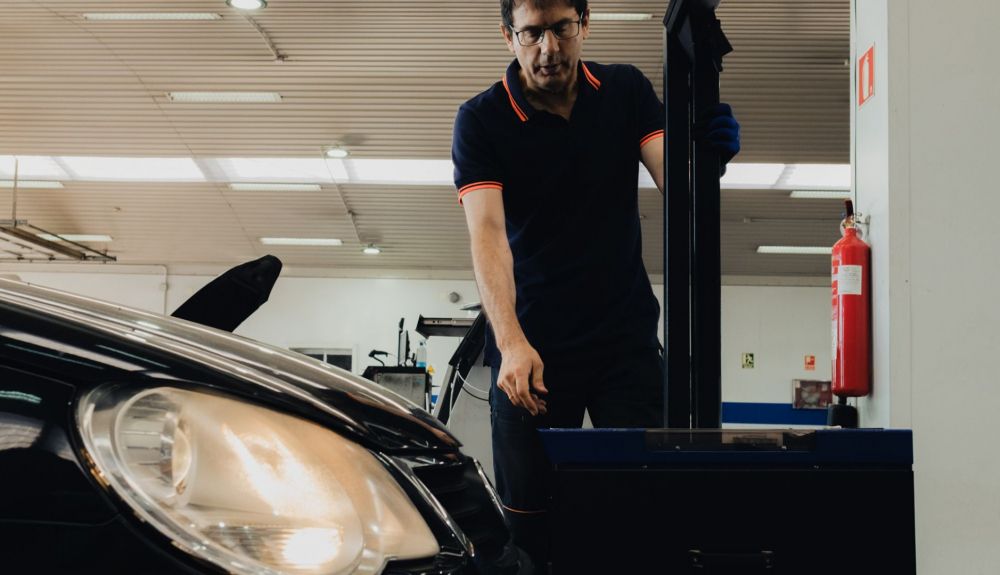
Testing the lights at a Spanish vehicle inspection station.
However, it was noted that Tesla cars performed disappointingly in the evaluation and that other vehicles with similar or even higher mileage performed significantly better.
The Maintenance Problem in Tesla Cars
In addition to design flaws, deficiencies in service and maintenance are also considered a cause of Tesla’s poor performance. Since the American company promotes a virtually maintenance-free concept, there are no prescribed inspection intervals. Those who drive without performing any maintenance often overlook essential elements such as suspension wear or brake malfunctions.
In light of these findings, the German Association for Technical Inspection (TÜV) is calling for an update to mandatory testing in Europe to place greater emphasis on the safety of electric vehicles, including more comprehensive testing and analysis of high-voltage systems and a standardized battery health assessment.