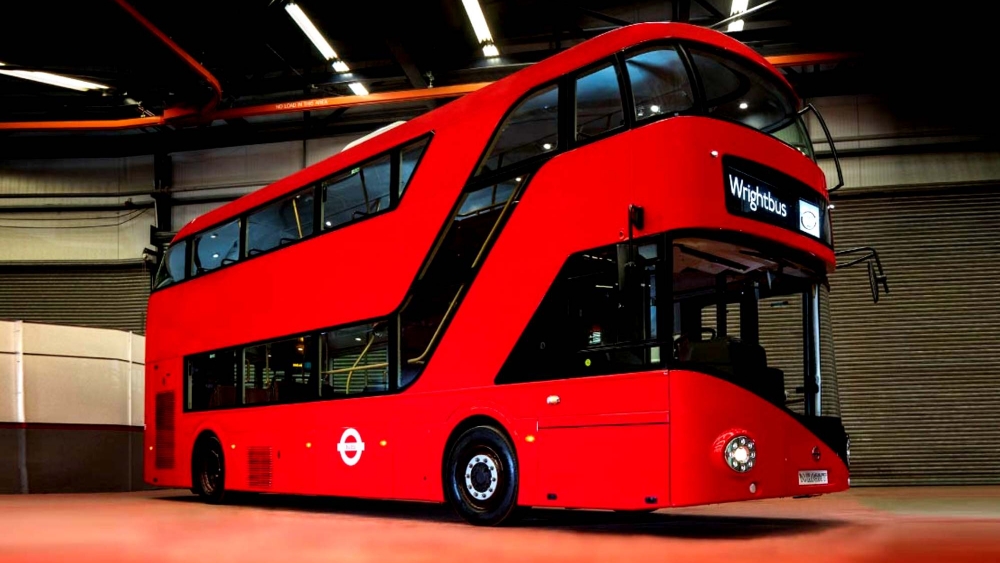
The company has sold 300 hydrogen-powered buses since 2022, but acknowledges that battery-powered buses have won the battle in the short term.
In the fight to become the standard for clean mobility, there is no doubt that batteries are winning the battle against hydrogen. In passenger cars, the latter are barely noticeable, while the former, although slowly, continue to grow, with more and more models flooding the market. In heavy transport, the situation should theoretically be different due to the sector’s characteristics, but in practice, it is identical.
Jean-Marc Gales, CEO of Wrightbus, gave an extensive interview to Electrive in which he discusses the current state of the electrified bus sector and what he believes will happen in the short and medium term.
The present belongs to batteries, the future perhaps to hydrogen
His company sells all kinds of electrified options, but looking at his data, he has a very clear understanding of the current situation: “In the short term, battery electric vehicles have won the battle for zero emissions. But with the right infrastructure and funding, hydrogen will make a comeback, especially in niches where batteries struggle.”
He refers to his 2024 statistics: “Last year was a good year for hydrogen. Of the nearly 1,200 buses we will sell this year, approximately 80 will be hydrogen-powered,” he says, noting that diesel buses account for a similar number, leaving battery electric vehicles representing 85% of his business.
Despite the figures, he believes hydrogen should be the preferred option for this type of transport, although he is aware that it will most likely share the spotlight with battery electric vehicles. Since 2022 they have sold 300 hydrogen-powered buses, but the situation is currently critical: “At the moment, we have no hydrogen orders for next year. Demand is almost exclusively electric, with some diesel still present.”
He expects this type of propulsion to gain traction, because he believes it’s a much better technology for this purpose than conventional batteries: “Between Heathrow and Gatwick, or between Cork and Dublin, buses run 24/7. They can’t be stopped for hours to refuel. Hydrogen could have excellent practical applications in heavy machinery and buses.”
He points out that recharging the enormous battery required by an electric bus, even with ultra-fast charging, involves very long waiting times that this sector simply cannot afford, as it means having vehicles sitting idle and unused. In contrast, refueling with hydrogen is much faster, and in large vehicles like buses, there are no space limitations for the tanks.
Converting Old Diesel Buses
Another branch of Wrightbus’s business is converting diesel buses into 100% electric models. It’s a process that takes three to four weeks and involves replacing the propulsion system, installing the battery, and so on, but comes with a warranty just like a brand-new vehicle.
“It costs less than half the price of a new electric bus, but customers get a 10-year warranty and the same drivetrain we use in our new models,” explains Gales, who also points out that each unit saves approximately 40,000 liters of diesel fuel per year.