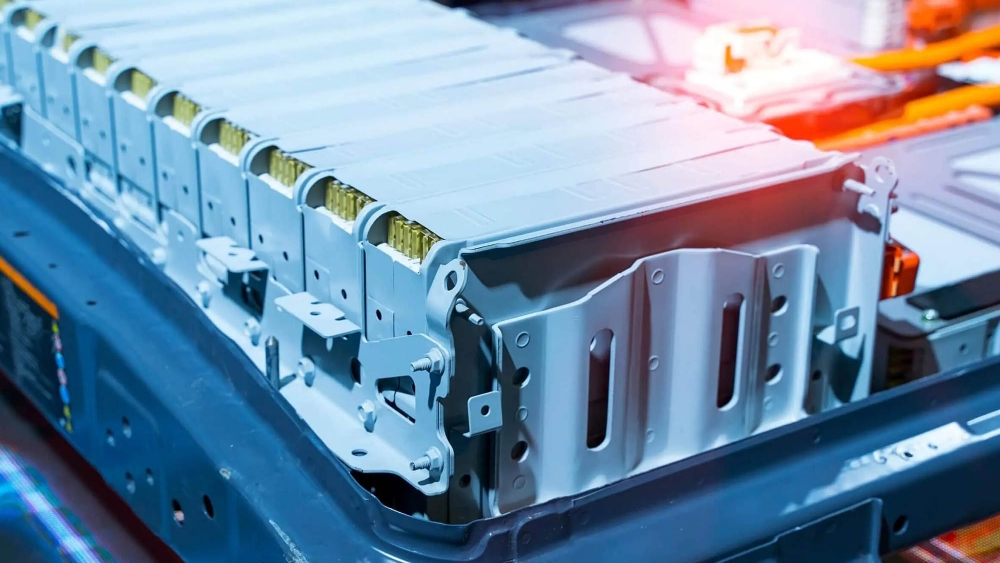
Deep discharges shorten the useful life of batteries and chemically degrade them. Many manufacturers prevent this by reporting the usable capacity and reserving a portion as gross capacity.
When an electric vehicle battery is subjected to a deep discharge, the consequences can be very serious for its chemical integrity and long-term performance. According to experts, when the charge level falls below a critical threshold, usually below 20%, internal stress is generated that can damage the separator layer between the anode and cathode, promoting the appearance of dendrites and sulfates that reduce the battery’s full capacity. This progressive damage results in irreversible storage loss. Although a single discharge does not immediately destroy the system, frequent repetition accelerates degradation and compromises its durability.
In addition to capacity loss, extreme discharges can cause chemical instability in the cells, increasing the risk of malfunction. In severe cases, sulfation or dendrite formation can cause internal short circuits, leading to overheating, gas release, or even spontaneous combustion.
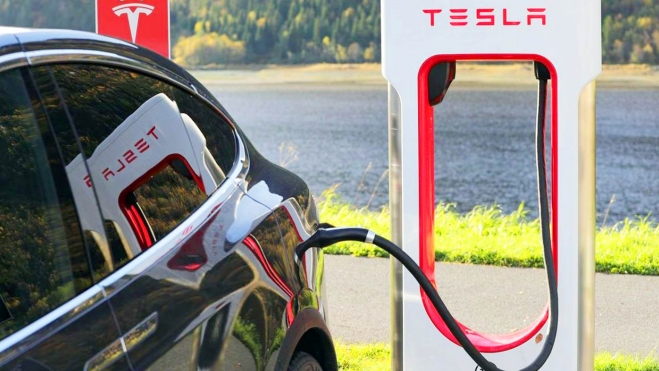
After a deep discharge, the battery requires a recovery protocol.
What happens to a Tesla battery when a deep discharge occurs?
In the case of the Californian manufacturer, leaving a Tesla battery completely discharged to 0% not only immobilizes the vehicle, but also seriously compromises the health of its battery. Tesla warns that exhausting its charge to the maximum can cause damage to electrical and electronic components, and forces the driver to resort to manual procedures to reactivate the system, which can affect long-term durability.
When it reaches 0%, the system switches to low-power “turtle mode,” even deactivating the 12V auxiliary battery that manages elements such as locks and door unlocking. In this state, only an immediate recharge or an auxiliary starting system (jump-start) can restore basic functions. If both the high-voltage and low-voltage blocks are depleted, the driver has no options except to seek technical assistance to restart the system.
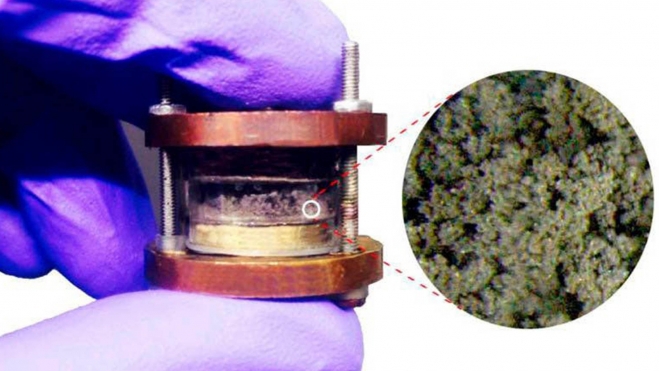
Sulfation and dendrite formation increase with deep discharges.
The total depletion of a lithium-ion battery increases the rate of cell degradation. According to studies published in journals such as Renewable and Sustainable Energy Reviews and Nature, this can cause internal short circuits, loss of capacity, and the generation of gases that shorten its useful life. In addition, each extreme discharge cycle slightly undermines the total capacity of the pack.
Although turtle mode allows you to travel a few extra miles, it is not a reliable reserve, according to tests carried out by platforms such as CarMax. It is a limited measure, designed to facilitate access to a charging point, but not a guaranteed solution when the battery is at its limit.
The environment also influences how the battery copes with a deep discharge. Extreme temperatures, intense heat or extreme cold, accelerate degradation and reduce efficiency. Driving style, such as sudden acceleration, or systems such as air conditioning or “sentinel mode,” cause extra drainage, especially if the vehicle remains parked and connected to the grid.
How does the recovery protocol work?
Tesla recommends not ignoring low battery warnings or relying on invisible reserves: the manual clearly states that the battery should not be allowed to discharge completely because it causes damage not covered by the warranty. If you run out of charge, it is advisable to stop the vehicle in a safe place, request a tow or electrical assistance, and recharge as soon as possible.
If the internal systems fail, it is necessary to manually start the 12V secondary battery after a controlled jump-start, which should not last more than 20 seconds to avoid short circuits. Once restored, connect the main unit to a charging source.
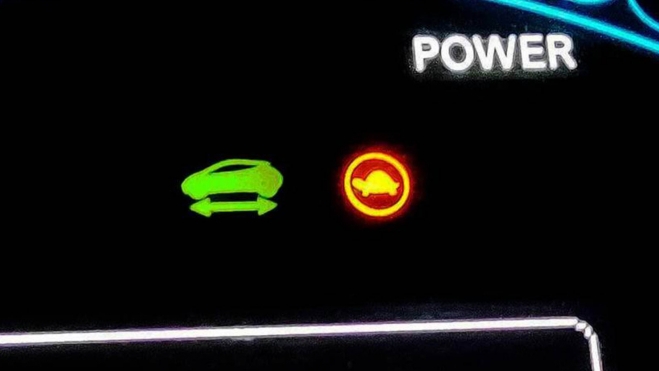
Manufacturers advise against ‘forcing’ turtle mode.
Best practices (for all brands)
To extend battery life and avoid unwanted consequences, Tesla advises keeping the charge between 20% and 80% in everyday use, and reserving 100% for long trips only. Avoiding running the car down to 0% is essential, the brand warns. Likewise, not leaving the vehicle parked for long periods without recharging and reducing the use of high-consumption systems when not necessary are part of the recommended routine.
Continuous monitoring by drivers using the app and using the car in demanding environments contribute to faster battery depletion. Therefore, Tesla recommends maintaining intermediate charge levels to preserve the battery pack’s useful life.
The price of the training is 250 euros.
The training is asynchronous online, you can do it at your own pace, whenever and from wherever you want, you set the schedule.
Classes are video recorded.
Start date: The training can be started whenever you want. Once payment is made, you have access to the training.
The training is in English, subtitles and syllabus avalaible.
Other subtitles and video syllabus available: Arabic, Chinese, French, German, Indonesian, Italian, Japanese, Korean, Persian, Portuguese, Russian, Spanish, Thai, Turkish, Vietnamese.
All syllabus has been developed by the teacher.
Fill out the following form to receive course information, or write an email to:
Contact.
- José Miguel Fernández Gómez.
- Email: info@advancedfleetmanagementconsulting.com
- Mobile phone: +34 678254874 Spain.
Course Features.
- The course is aimed at: managers, middle managers, fleet managers, any professional related to electric vehicles, and any company, organization, public administration that wants to switch to electric vehicles.
- Schedule: at your own pace, you set the schedule.
- Duration: 27 hours.
- Completion time: Once you have started the course you have 6 months to finish it.
- Materials: english slides and syllabus for each class in PDF.
- If you pass the course you get a certificate.
- Each class has a quiz to take.
- English language, subtitles and syllabus.
- Other subtitles and video syllabus available: Arabic, Chinese, French, German, Indonesian, Italian, Japanese, Korean, Persian, Portuguese, Russian, Spanish, Thai, Turkish, Vietnamese.
-
Start date: The course can be started whenever you want. Once payment is made, you have access to the course.
Price.
- 250 euros.
-
You can pay by bank transfer, credit card, or PayPal.
Goals.
- Know the most important aspects to take into account when electrifying a fleet of vehicles.
- Learn about electric vehicle technology.
- Know the polluting emissions that occur when a fleet of vehicles is electrified.
- Know what technologies are viable to electrify a fleet of vehicles.
- Learn about real cases of vehicle fleet electrification.
- Know the history of the electric vehicle.
Syllabus.
- History of electric vehicle.
- Battery electric vehicle.
- History of the lithium ion battery.
- Types of electric vehicle batteries.
- New electric vehicle battery materials.
- Other storage technologies of electric vehicle batteries.
- Battery components.
- Battery Management System-BMS.
- The use of rare earths in the electric vehicle.
- Fundamentals of the electric motor.
- Types of electric motors and their relationship to rare earths.
- Electric vehicle inverter: what it is and what it is used for.
- Battery degradation loss of autonomy.
- What is covered and not covered by the electric vehicle battery warranty.
- Battery passport.
- Battery fire of the electric vehicle.
- Causes, stages and risks of battery fire.
- Real cases of electric vehicle fire.
- Electric vehicle battery fire extinguishment.
- Measures to prevent, extinguish and control electric vehicle fires.
- Fire safety regulations for electric vehicle batteries.
- Impact of ambient temperature on battery performance.
- The electric vehicle brands most likely to breakdown due to high temperatures.
- Which emmits more Co2, an electric car or a car with an internal combustion engine.
- Plug-in electric hybrids, a solution or an obstacle to electrify the vehicle fleet?.
- Fleet electrification with hydrogen vehicles.
- Cybersecurity of charging points.
- The theft of copper in electric vehicle chargers.
- Incidents at electric car charging points and their possible solutions.
- Batery swapping.
- The second life of the battery of the EV at Rome airport.
- The tires of electric vehicles.
- Electric vehicle, artificial intelligence, and electricity demand.
- The case of Hertz electrification.
- The case of Huaneng: The world’s first electrified and autonomous mining fleet
- Consequences on the vehicle fleet of an electric vehicle brand going bankruptcy.
- E-fuels and synthetic fuels are not an alternative to decarbonize the vehicle fleet.
- How to avoid premature obsolescence of the fleet’s electric vehicles.
- Polluting emissions from brakes.
- Mileage manipulation to extinguish warranty early on electric vehicles.
- The importance of the electricity tariff in reducing electric vehicle costs.
- Taxi reality: Three true stories of electrification for economy.
- Electric vehicles cause more motion sickness than gasoline vehicles.
- Electric vehicle insurance and advanced driver assistance systems-ADAS.
- One-pedal driving: Risk of accidents.
Training teacher.
José Miguel Fernández Gómez is the manager of Advanced Fleet Management Consulting, a consulting company specialized in vehicle fleet management and the owner of the fleet management channel on YouTube AdvancedfleetmanagementTube.
Since 2007 I have been working in fleet management consultancy and training for all types of companies, organizations and public administrations. With this course I want to make my experience and knowledge acquired during my work and academic career in this discipline available to my clients.
I carry out consulting projects related to vehicle fleet management and collaborate with companies developing products/services in this market. I have worked at INSEAD (France), one of the best business schools in the world, as a Research Fellow at the Social Innovation Centre-Humanitarian Research Group.
I carried out consulting and research activities in a project for the United Nations refugee organization (UNHCR), optimizing the size and management of the activities of the vehicle fleet, which this organization has distributed throughout the world (6,500 vehicles).
I worked as a fleet manager for five years, for Urbaser, which managed the street cleaning service in Madrid (Spain). I managed a fleet of 1,000 vehicles, made up of various technologies and types of vehicles such as: heavy and light vehicles, vans, passenger cars or sweepers.
I have completed all my academic degrees at the Polytechnic University of Madrid, one of the best universities in Spain, my academic training is as follows:
I hold a PhD in Industrial Engineering, with international mention, since I carried out research stays at the University of Liverpool (UK) and at the Royal Institute of Technology-KTH (Sweden).
I am also an Industrial Engineer (Industrial Management) and an Mechanical Engineer, and I completed a Master’s Degree in Operations Management, Quality and Technological Innovation (Cepade) and another Master’s Degree in Industrial Management (UPM).
I have publications in indexed magazines and presentations at international industrial engineering conferences.
Cancellations and penalties.
Once the course has started, the amount will not be refunded.