The class develops what a car’s VIN number is, where to find it, why it is so important, and its implications for fleet management.
Slide 2. What is a vehicle’s VIN number?.
- What a car’s VIN number is and is not.
Although the license plate identifies a car at a glance, the true ID of any car is its VIN number. This unique 17-character code not only allows you to know who manufactured it, where, and when, but also to know its history, verify its authenticity, or facilitate any repairs.
Knowing where to find it and how to interpret it can be key, especially if you are buying a used car or want to avoid fraud. Let’s review what the VIN is and how it differs, for example, from the chassis number.
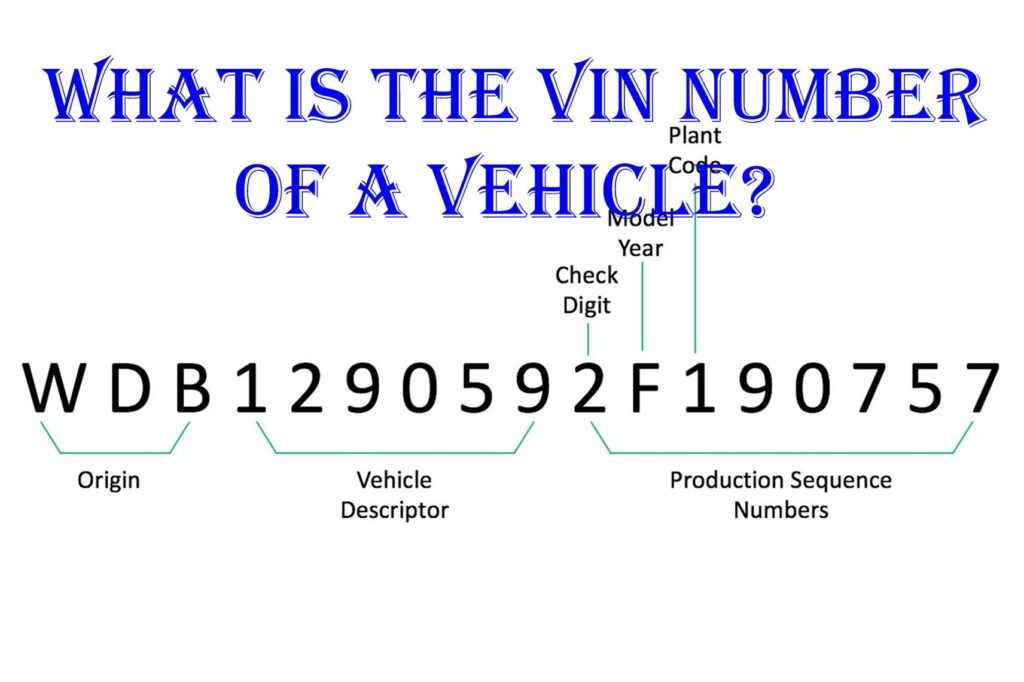
The VIN, or Vehicle Identification Number, is a 17-character alphanumeric code that is uniquely assigned to each car from the moment it is manufactured. It acts as a fingerprint for the vehicle: no two are alike.
This code provides detailed information about the car, such as its manufacturer, model, engine type, year of production, country of origin, and assembly plant. It is also key to checking its maintenance history, possible accidents, actual mileage, or whether it has been stolen or tampered with.
- What is a car’s VIN used for and where can you find it?.
Knowing the VIN number is not only useful, it is essential in many situations. For example:
- When buying a used car, to verify that it has not been stolen or tampered with.
- It allows you to find out the vehicle’s history, which is useful for buying or selling, or to find out what types of repairs have been done, if it has been in an accident, how many actual miles the car has traveled, etc.
- At the MOT, to confirm that the vehicle’s documentation matches the car being inspected.
- At repair shops, to order specific parts according to the exact characteristics of the vehicle.
- At insurance companies, to assess risks and coverage.
- In manufacturer recall campaigns, to check whether a vehicle is affected.
Although it may vary depending on the model, the VIN is usually stamped directly onto the vehicle chassis or onto an identification plate with a punch press and is also reflected in its official documentation, such as the registration certificate and technical specifications.
The most common locations are:
- On the dashboard, visible from the outside, at the bottom of the windshield (driver’s side).
- In the engine compartment, next to one of the shock absorbers.
- On the driver’s door frame or under the floor mat.
- Under the passenger seat or even in the trunk.
In addition, some brands place it in several areas to make it more difficult to tamper with. If you can’t find it, you can consult the car manual. Note: the visible version on the windshield is not always the most reliable. The VIN stamped on the chassis is much more difficult to forge.
- How the VIN number is structured and why it is important.
The VIN was standardized in 1980 under the international standard ISO 3779 and is divided into three main blocks:
- WMI World Manufacturer Identifier: Digits 1 to 3. These identify the country and manufacturer. Example: “VF1” indicates a Renault manufactured in France.
- VDS Vehicle Descriptor Section: Digits 4 to 9. These detail the model, body type, engine type, transmission system, etc. The ninth character may be a check digit, used to verify the validity of the VIN.
- VIS Vehicle Identifier Section: Digits 10 to 17, which contain individual vehicle information. For example, 10 is the year of manufacture, 11 corresponds to the assembly plant, and 12 to 17 is the production serial number.
As for the letters: I, O, Q, and Ñ are not used in the VIN to avoid confusion with numbers.
- So, are the VIN, frame number, and chassis number not the same thing?.
No. The VIN includes the chassis or frame number, but it also includes more information. It was implemented as a standard in 1980 in accordance with ISO 3779, as prior to that there was no general standard regulating identification.
Before 1980, the length of the VIN varied between 11 and 17 characters. And information about vehicles manufactured at that time is quite limited.
Even if important components of the car are changed, such as the engine, the VIN never changes, because it is linked to the chassis. So be very careful: if you are inspecting a car and the VIN stamped on the chassis does not match the one on the documentation or on the other plates on the vehicle, do not buy it. It may be a stolen or tampered car.
In this regard, it should be remembered that this type of fraud is punishable by law and is considered a serious crime. For example, in Spain under Article 392 of the Penal Code tampering with or falsifying the VIN can result in prison sentences of six months to three years. In conclusion, the VIN number is not just another code: it is the real identity of your car. Make sure you know it, protect it, and verify it whenever necessary.
- Falsification of the VIN number.
In the case of vehicles manufactured before 1980, it is easier to falsify their VIN plate. At that time, there was no universal standard for these identifiers, so manufacturers used different formats, etc.
- Implications for fleet management.
The use of the VIN number has many advantages for fleet management due to all the benefits mentioned above.
But the most important one is when purchasing a used vehicle, because you can find out the vehicle’s history, whether it has been in an accident, how many miles it has actually traveled, etc. It also guarantees the sale of the vehicle from the fleet to a buyer.
Vehicles that are stolen in one country and sold in another usually have their VIN changed, so you have to be very careful with vehicles from other countries.
For example, in Spain, stolen vehicles are sold in North Africa or Eastern Europe.
Being proactive is essential when buying used vehicles. Understanding the verification steps and knowing where to look for possible warning signs can help you avoid becoming a victim of VIN fraud. Some recommendations include:
- Always check a vehicle history report before purchasing.
Always verify that the VIN number on the vehicle matches exactly with all registration documents. When performing a VIN check, pay close attention to the format and check for any signs of alteration. Legitimate documents should display uniform print quality and contain appropriate security features.
- Check the VIN numbers in several locations.
The valid VIN on the windshield can be easily tampered with in the event of theft, so check the VIN plates in several areas of the bodywork and make sure they are not missing.
- Misaligned or differently sized characters on the VIN plates.
- Scratches or signs of tampering around the VIN on the dashboard, under the windshield.
- Inconsistent font styles or irregular spacing between characters.
- Rivets newer than the surrounding area on the door frame.
- Missing or damaged VIN labels under the hood, in the trunk, or on the dashboard.
- Obtain a vehicle history report.
Request a complete vehicle history report using the VIN to verify the used vehicle’s past. This report should reveal important details about previous owners, accidents, mileage records, and title status. Any discrepancies could indicate potential fraud.
- Confirm the seller’s credentials and ownership documentation.
- Use manufacturer databases to authenticate the VIN.
- Consider professional inspection services.
- Use a reliable VIN decoder to detect fake codes.
Emerging anti-fraud technologies: Blockchain technology and digital verification systems are revolutionizing VIN security. Manufacturers now implement smart chips and QR codes linked to secure databases, making it nearly impossible to create convincing fake VINs. These innovations, combined with AI-based verification systems, provide multiple layers of protection against fraud.
Slide 3. Thank you for your time.
The class has developed what a car’s VIN number is, where to find it, why it is so important, and the implications for fleet management, see you soon.
Bibliography.
https://www.mitsubishi-motors.com.pe/blog/significado-numero-vin/
https://www.motorpasion.com/revision/que-numero-vin-coche-donde-encontrarlo-que-importante-estas-pensando-comprarte-coche-segunda-mano
https://vingurus.com/es/blog/vingurus-latest-posts/expert-advice-to-spot-a-fake-vin-number
The price of the training is 250 euros.
The training is asynchronous online, you can do it at your own pace, whenever and from wherever you want, you set the schedule.
Classes are video recorded.
Start date: The training can be started whenever you want. Once payment is made, you have access to the training.
The training is in English, subtitles and syllabus avalaible.
Other subtitles and video syllabus available: Arabic, Chinese, French, German, Indonesian, Italian, Japanese, Korean, Persian, Portuguese, Russian, Spanish, Thai, Turkish, Vietnamese.
All syllabus has been developed by the teacher.
Fill out the following form to receive course information, or write an email to:
Contact.
- José Miguel Fernández Gómez.
- Email: info@advancedfleetmanagementconsulting.com
- Mobile phone: +34 678254874 Spain.
Course Features.
- The course is aimed at: managers, middle managers, fleet managers, any professional related to electric vehicles, and any company, organization, public administration that wants to switch to electric vehicles.
- Schedule: at your own pace, you set the schedule.
- Duration: 25 hours.
- Completion time: Once you have started the course you have 6 months to finish it.
- Materials: english slides and syllabus for each class in PDF.
- If you pass the course you get a certificate.
- Each class has a quiz to take.
- English language, subtitles and syllabus.
- Other subtitles and video syllabus available: Arabic, Chinese, French, German, Indonesian, Italian, Japanese, Korean, Persian, Portuguese, Russian, Spanish, Thai, Turkish, Vietnamese.
-
Start date: The course can be started whenever you want. Once payment is made, you have access to the course.
Price.
- 250 euros.
-
You can pay by bank transfer, credit card, or PayPal.
Goals.
- Know the most important aspects to take into account when electrifying a fleet of vehicles.
- Learn about electric vehicle technology.
- Know the polluting emissions that occur when a fleet of vehicles is electrified.
- Know what technologies are viable to electrify a fleet of vehicles.
- Learn about real cases of vehicle fleet electrification.
- Know the history of the electric vehicle.
Syllabus.
- History of electric vehicle.
- Battery electric vehicle.
- History of the lithium ion battery.
- Types of electric vehicle batteries.
- New electric vehicle battery materials.
- Other storage technologies of electric vehicle batteries.
- Battery components.
- Battery Management System-BMS.
- Fundamentals of the electric motor.
- Electric vehicle inverter: what it is and what it is used for.
- Battery degradation loss of autonomy.
- What is covered and not covered by the electric vehicle battery warranty.
- Battery passport.
- Battery fire of the electric vehicle.
- Causes, stages and risks of battery fire.
- Real cases of electric vehicle fire.
- Electric vehicle battery fire extinguishment.
- Measures to prevent, extinguish and control electric vehicle fires.
- Fire safety regulations for electric vehicle batteries.
- Impact of ambient temperature on battery performance.
- Which emmits more Co2, an electric car or a car with an internal combustion engine.
- The use of rare earth earths in the electric vehicle.
- Plug-in electric hybrids, a solution or an obstacle to electrify the vehicle fleet?.
- Fleet electrification with hydrogen vehicles.
- Cybersecurity of charging points.
- The theft of copper in electric vehicle chargers.
- Incidents at electric car charging points and their possible solutions.
- Batery swapping.
- The second life of the battery of the electric vehicle at Rome-Fiumicino Leonardo Da Vinci airport.
- The tires of electric vehicles.
- Electric vehicle, artificial intelligence, and electricity demand.
- The case of Hertz electrification.
- The case of Huaneng: The world’s first electrified and autonomous mining fleet.
- Consequences on the vehicle fleet of an electric vehicle brand going bankruptcy.
- E-fuels and synthetic fuels are not an alternative to decarbonize the vehicle fleet.
- How to avoid premature obsolescence of the fleet’s electric vehicles.
- Polluting emissions from brakes.
- Mileage manipulation to extinguish warranty early on electric vehicles.
- The importance of the electricity tariff in reducing electric vehicle costs.
- Electric vehicles cause more motion sickness than gasoline vehicles.
- Electric vehicle insurance and advanced driver assistance systems-ADAS.
- One-pedal driving Risk of accidents.
Training teacher.
José Miguel Fernández Gómez is the manager of Advanced Fleet Management Consulting, a consulting company specialized in vehicle fleet management and the owner of the fleet management channel on YouTube AdvancedfleetmanagementTube.
Since 2007 I have been working in fleet management consultancy and training for all types of companies, organizations and public administrations. With this course I want to make my experience and knowledge acquired during my work and academic career in this discipline available to my clients.
I carry out consulting projects related to vehicle fleet management and collaborate with companies developing products/services in this market. I have worked at INSEAD (France), one of the best business schools in the world, as a Research Fellow at the Social Innovation Centre-Humanitarian Research Group.
I carried out consulting and research activities in a project for the United Nations refugee organization (UNHCR), optimizing the size and management of the activities of the vehicle fleet, which this organization has distributed throughout the world (6,500 vehicles).
I worked as a fleet manager for five years, for Urbaser, which managed the street cleaning service in Madrid (Spain). I managed a fleet of 1,000 vehicles, made up of various technologies and types of vehicles such as: heavy and light vehicles, vans, passenger cars or sweepers.
I have completed all my academic degrees at the Polytechnic University of Madrid, one of the best universities in Spain, my academic training is as follows:
I hold a PhD in Industrial Engineering, with international mention, since I carried out research stays at the University of Liverpool (UK) and at the Royal Institute of Technology-KTH (Sweden).
I am also an Industrial Engineer (Industrial Management) and an Mechanical Engineer, and I completed a Master’s Degree in Operations Management, Quality and Technological Innovation (Cepade) and another Master’s Degree in Industrial Management (UPM).
I have publications in indexed magazines and presentations at international industrial engineering conferences.
Cancellations and penalties.
Once the course has started, the amount will not be refunded.