
The class develops what the car’s serpentine belt is, when to change it, what to do if it breaks, and the implications for fleet management.
Slide 2. Car’s serpentine or auxiliary belt.
- What is the serpentine belt?.
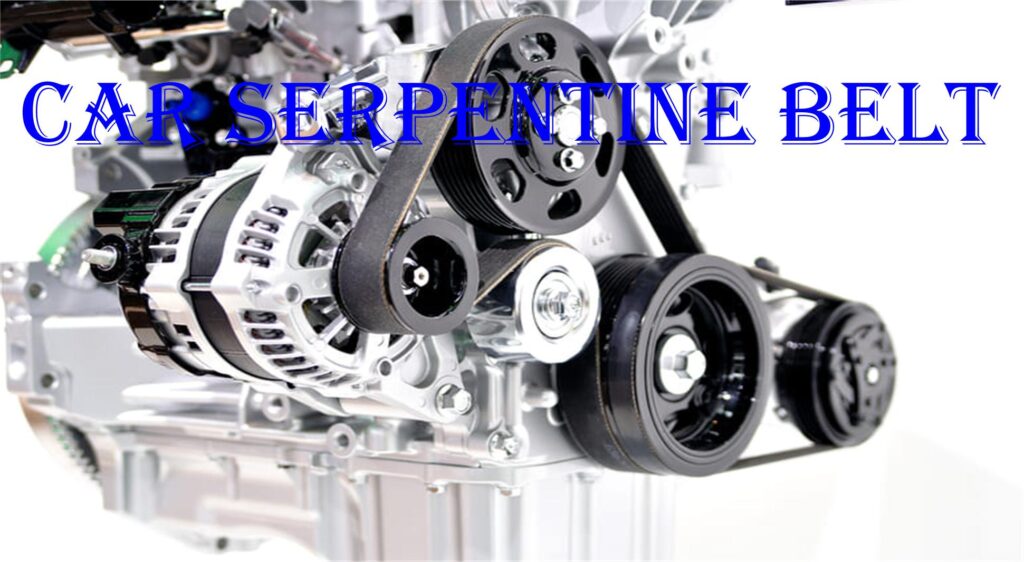
The serpentine belt is a flexible band that transmits the movement of the crankshaft to elements such as the alternator, power steering, and air conditioning.
When it breaks, you have to be prepared for various problems and suspicious noises that will appear in the engine. Therefore, it is recommended to check it from time to time and replace it before it breaks. However, it is not the same as the timing belt, many people confuse them, but they are completely different.
Without the serpentine belt, charging your cell phone in the car or turning the steering wheel smoothly would be impossible. It can be easily seen when you open the hood, as it rotates at the same time as the engine. It differs from the timing belt in that it operates externally and moves components via pulleys.
- Main functions of the serpentine belt.
- Power transmission to the alternator.
The serpentine belt turns the alternator, the device that recharges the battery and keeps the car’s entire electrical system running: lights, GPS, among others.
- Power steering operation.
The serpentine belt moves the power steering hydraulic pump, making it easy to turn the steering wheel.
- Air conditioning operation.
The serpentine belt starts the air conditioning compressor and ensures that the climate control system maintains the correct temperature inside the car.
- Driving the water pump, in some models.
In brands such as Mercedes-Benz and BMW, the water pump is driven by the serpentine belt, if it does not work properly, it can lead to insufficient cooling and possible engine overheating.
- Serpentine belt materials and design.
Most serpentine belts are made of nylon-reinforced rubber, which gives them high tensile strength and heat resistance, preventing slack and ensuring solid contact with the pulleys.
- From V-belts to today’s belts.
Older vehicles used V-shaped V-belts, which were prone to overheating and noise generation, while modern cars use flat, toothed belts, which are more efficient and quieter.
- Where is the alternator belt?.
The alternator belt is located at the front of the engine, where the crankshaft is connected to various components by a system of pulleys and tensioners. It is usually visible when the hood is opened, running along components such as the alternator, water pump, or air conditioning compressor. This position facilitates visual inspection, allowing for the early detection of cracks, wear, or misalignments that could cause vehicle malfunctions.
- Maintenance and inspection of the serpentine belt.
- Frequent visual inspection.
Caring for the belt involves performing regular visual inspections to identify wear, cracks, or fraying in its central section.
- Check tensioners and rollers.
It is important to inspect the rollers and tensioners along with the belt, because a stuck roller or damaged tensioner can cause improper tension and early failure.
- Signs of imminent failure.
A squeaking noise when starting the engine or turning the wheel suggests the presence of problems, commonly attributable to defective tensioners or rollers, resulting in uneven belt wear.
- Electrical and mechanical failures.
If the serpentine belt breaks, the battery failure indicator will light up, as the alternator will stop operating instantly.
Features such as power steering, air conditioning, and lights may stop working.
In a short time, the engine could overheat, which could result in the vehicle coming to a complete stop.
- Procedure in the event of a breakage.
Driving with a broken alternator belt is neither safe nor advisable. When it breaks, the battery stops charging and the electrical systems begin to fail within a few minutes.
In addition, if the belt drives the water pump, the engine can overheat quickly, which could cause serious damage. In the event of a breakage, it is recommended that you stop the vehicle safely.
- Repair costs.
If the serpentine belt breaks, there is a possibility that a piece of nylon could enter the timing belt, which could cause engine failure. This situation would require repairs costing more than 1500$.
- Symptoms of serpentine belt failure.
- Damaged belt.
If there is wear, breakage, or imbalance with respect to the alternator shaft, you may hear noise coming from the serpentine belt, accompanied by vibrations. If this happens, there is a possibility that the belt will become disconnected, resulting in the interruption of the car’s power supply.
- Incorrect belt tension.
When the alternator belt is not properly tensioned, various types of noise, such as buzzing or crackling, may occur. This may be due to a malfunction of the belt tensioner, a lack of tension, or an imbalance. If this problem occurs, the belt may come off its track.
- Cracked, inflexible belt.
This situation causes squeaking noises when the belt is in operation. Deterioration over time is the main cause of this problem, although it can also be caused by sudden changes in temperature or contact with chemicals.
- Dirty belt with deposits.
Dirt can become embedded in the belt, as well as in other related components, such as pulleys or rollers. This condition affects the operation of the equipment, as it alters the friction between the components and causes squeaking. In this case, the solution is simple, as it will only be necessary to clean the belt using a lubricant suitable for this component.
- Rollers in poor condition.
If the problems originate in the belt rollers, it is possible to hear creaking noises coming from the engine compartment. If the fault is not repaired, there is a possibility that the alternator belt will come off. To solve this problem, simply replace the belt rollers.
- Faulty electrical components.
If you notice a malfunction in any of the vehicle’s electrical systems, the serpentine belt may be worn or the alternator may be experiencing a fault that is affecting its operation. For example, you may notice a decrease in the intensity of the headlights and other vehicle lights. Engine performance problems may also occur, such as stalling and then not starting.
- How to change the serpentine belt.
It is crucial to perform this procedure with caution and following a specific sequence of steps to avoid damage to the engine or electrical systems. First, it is imperative to disconnect the battery and ensure that the vehicle is completely turned off and secure. Next, release the tension on the tensioner, remove the old belt, and install a new one, ensuring that it is correctly aligned on all pulleys. Finally, adjust the tensioner so that the belt has the proper tension.
The time required to change the alternator belt depends on the vehicle model and access to the engine. In vehicles with adequate accessibility, replacement can take between 30 minutes and 1 hour. However, in vehicles where the belt is more hidden or involves the removal of other components, the process can take up to two hours.
- How often is the serpentine belt changed?.
The serpentine belt is made of synthetic rubber, often reinforced with other fibers. Over time, this rubber tends to harden and lose elasticity, becoming drier and more brittle. A simple cut is enough for the serpentine belt to be completely damaged after a few miles or to wear out enough that it no longer slides properly on the various pulleys.
With daily use, the serpentine belt gradually wears out, requiring periodic replacement. Its serpentine life ranges from 80,000 to 125,000 miles, although this can vary depending on driving style, weather conditions, and vehicle maintenance.
Checking it at each inspection is key: if cracks, wear, or lack of tension appear, it should be replaced even before the maximum mileage recommended by the manufacturer to avoid serious breakdowns.
Another factor that influences this replacement interval is the weather conditions in the area. In locations with average temperatures, without extreme cold or heat, and provided that the inspection is favorable, the aforementioned replacement interval can be followed without any problems.
However, in areas with specific atmospheric conditions, it may be necessary to make adjustments earlier than anticipated. This component does not generally represent a significant source of problems, provided that the recommended inspection and maintenance measures are taken into account and applied appropriately.
- How much does it cost to replace the serpentine belt?.
The cost of replacing the serpentine belt varies depending on the vehicle model, accessibility to the engine, and whether any changes are made to the tensioners or pulleys. In addition, factors such as labor time required, availability of spare parts, and the repair shop’s pricing policy must be taken into account.
The cost of replacing the serpentine belt as part of preventive maintenance is approximately $100, although it can reach up to $150 or more if the vehicle has two belts or if the cost of the belt is higher.
- The importance of not confusing it with the timing belt.
Timing belts and serpentine belts are essential to the engine; the former synchronizes internal movement and the latter is responsible for auxiliary systems. Distinguishing between them is essential to prevent costly mistakes.
- Implications for fleet management.
The main consequence of a broken or malfunctioning serpentine belt is the cost of repair and the time the vehicle is out of service.
Preventive maintenance of the serpentine belt must be carried out in accordance with the vehicle manufacturer’s instructions, within the specified time frame, by qualified personnel and in an appropriate workshop.
It is recommended to use original or premium brand spare parts that guarantee high quality performance.
It is very important to train drivers on how to act in the event that the engine check or alternator light comes on.
If the check engine or alternator light comes on, the vehicle must be stopped immediately and the fleet manager or workshop manager notified to find out how to proceed. It is recommended that a tow truck be used to take the vehicle to our workshop, our facilities, or an external workshop.
In summary, the serpentine belt is vitally important to the performance of the vehicle. Regular maintenance, inspection of tensioners and rollers, and replacement at appropriate intervals prevent significant failures and ensure the proper functioning of the vehicle.
Slide 3. Thank you for your time.
The class has developed what the serpentine belt in a car is, when to change it, what to do if it breaks, and the implications for fleet management, see you soon.
Bibliography.
https://www.autopista.es/noticias-motor/correa-servicio-coche-que-es-pasa-si-se-rompe-ecn_313979_102.html
https://club.autodoc.es/magazin/sorrea-alternador-cuando-cambiar-y-que-sintomas#:~:text=La%20bater%C3%ADa%20comenzar%C3%A1%20a%20descargarse,veh%C3%ADculo%20podr%C3%ADa%20detenerse%20por%20completo.
The price of the training is 250 euros.
The training is asynchronous online, you can do it at your own pace, whenever and from wherever you want, you set the schedule.
Classes are video recorded.
Start date: The training can be started whenever you want. Once payment is made, you have access to the training.
The training is in English, subtitles and syllabus avalaible.
Other subtitles and video syllabus available: Arabic, Chinese, French, German, Indonesian, Italian, Japanese, Korean, Persian, Portuguese, Russian, Spanish, Thai, Turkish, Vietnamese.
All syllabus has been developed by the teacher.
Fill out the following form to receive course information, or write an email to:
Contact.
- José Miguel Fernández Gómez.
- Email: info@advancedfleetmanagementconsulting.com
- Mobile phone: +34 678254874 Spain.
Course Features.
- The course is aimed at: managers, middle managers, fleet managers, any professional related to electric vehicles, and any company, organization, public administration that wants to switch to electric vehicles.
- Schedule: at your own pace, you set the schedule.
- Duration: 28 hours.
- Completion time: Once you have started the course you have 6 months to finish it.
- Materials: english slides and syllabus for each class in PDF.
- If you pass the course you get a certificate.
- Each class has a quiz to take.
- English language, subtitles and syllabus.
- Other subtitles and video syllabus available: Arabic, Chinese, French, German, Indonesian, Italian, Japanese, Korean, Persian, Portuguese, Russian, Spanish, Thai, Turkish, Vietnamese.
-
Start date: The course can be started whenever you want. Once payment is made, you have access to the course.
Price.
- 250 euros.
-
You can pay by bank transfer, credit card, or PayPal.
Goals.
- Know the most important aspects to take into account when electrifying a fleet of vehicles.
- Learn about electric vehicle technology.
- Know the polluting emissions that occur when a fleet of vehicles is electrified.
- Know what technologies are viable to electrify a fleet of vehicles.
- Learn about real cases of vehicle fleet electrification.
- Know the history of the electric vehicle.
Syllabus.
Electric vehicle technology.
- History of the electric vehicle.
- Electric vehicle technology.
- Fundamentals of the electric vehicle battery.
- Other electric vehicle battery storage technologies.
- Electric vehicle battery components
- Battery Management System-BMS.
- Electric vehicle battery degradation.
- Impact of ambient temperature on battery performance.
- Fundamentals of the electric vehicle motor.
- Types of electric motors and their relationship with rare earths.
- An electric vehicle inverter: What it is and what it is used for.
- The use of rare earths in electric vehicles.
- Electric vehicle tires.
Electric vehicle battery.
- What is and is not covered by the electric vehicle battery warranty.
- The battery passport.
- A second life for electric vehicle batteries
Electric vehicle battery fire.
- Prevention, control, and extinguishing of electric vehicle battery fires.
- Fire safety regulations for electric vehicle batteries.
Charging Points: Problems and Solutions.
- Problems with electric car charging points and their possible solutions
- Copper theft from electric vehicle chargers
- Cybersecurity at charging points
Polluting emissions from electric vehicles.
- Which emits more CO2, an electric car or a car with an internal combustion engine?
- Polluting emissions from brakes
Key aspects of fleet electrification.
- Fleet electrification with plug-in hybrids: Problem or solution?
- Fleet electrification with hydrogen vehicles.
- Battery replacement: A feasible solution for urban fleets.
- The Hertz electrification case.
- The Huaneng case, the world’s first electrified and autonomous mining fleet.
- A real-life taxi case: Three true stories of electrification for economic reasons.
- The second life of the electric vehicle battery at Rome-Fiumicino Leonardo Da Vinci Airport.
- Consequences for the vehicle fleet if an electric vehicle brand goes bankrupt.
- The electric vehicle brands most likely to break down due to high temperatures.
- How to avoid premature obsolescence of electric vehicles in the fleet.
- Mileage manipulation to void the warranty.
- E-fuels and synthetic fuels are not an alternative for decarbonizing the vehicle fleet.
- The importance of electricity tariffs in reducing electric vehicle costs.
- Electric vehicles, artificial intelligence, and electricity demand.
Electric vehicle insurance.
- The price of electric vehicle insurance.
- Electric vehicle insurance and advanced driver assistance systems (ADAS).
Driving an electric vehicle.
- Electric vehicles cause more motion sickness than gasoline-powered vehicles.
- One-pedal driving: Risk of accidents.
Training teacher.
José Miguel Fernández Gómez is the manager of Advanced Fleet Management Consulting, a consulting company specialized in vehicle fleet management and the owner of the fleet management channel on YouTube AdvancedfleetmanagementTube.
Since 2007 I have been working in fleet management consultancy and training for all types of companies, organizations and public administrations. With this course I want to make my experience and knowledge acquired during my work and academic career in this discipline available to my clients.
I carry out consulting projects related to vehicle fleet management and collaborate with companies developing products/services in this market. I have worked at INSEAD (France), one of the best business schools in the world, as a Research Fellow at the Social Innovation Centre-Humanitarian Research Group.
I carried out consulting and research activities in a project for the United Nations refugee organization (UNHCR), optimizing the size and management of the activities of the vehicle fleet, which this organization has distributed throughout the world (6,500 vehicles).
I worked as a fleet manager for five years, for Urbaser, which managed the street cleaning service in Madrid (Spain). I managed a fleet of 1,000 vehicles, made up of various technologies and types of vehicles such as: heavy and light vehicles, vans, passenger cars or sweepers.
I have completed all my academic degrees at the Polytechnic University of Madrid, one of the best universities in Spain, my academic training is as follows:
I hold a PhD in Industrial Engineering, with international mention, since I carried out research stays at the University of Liverpool (UK) and at the Royal Institute of Technology-KTH (Sweden).
I am also an Industrial Engineer (Industrial Management) and an Mechanical Engineer, and I completed a Master’s Degree in Operations Management, Quality and Technological Innovation (Cepade) and another Master’s Degree in Industrial Management (UPM).
I have publications in indexed magazines and presentations at international industrial engineering conferences.
Cancellations and penalties.
Once the course has started, the amount will not be refunded.