Slide 2. Check engine light.
- What exactly is the check engine light?.
One of the most uncertain moments for many drivers is when the check engine light comes on the instrument panel. The problem is not only that it comes on, but also the uncertainty of whether the vehicle is about to fail completely or whether it is just a simple warning.
The important thing is not to ignore it. This warning light is connected to the vehicle’s diagnostic system and serves to alert you that there is a problem with the engine. Addressing it in time can save you very expensive repairs.
- A warning from the on-board diagnostic system (OBD).
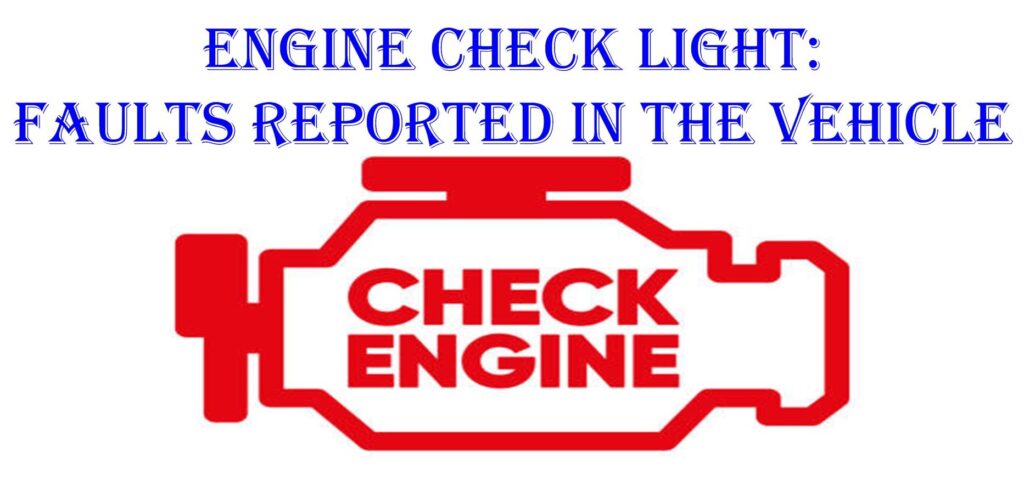
The check engine light is a small icon in the shape of an engine that appears on the dashboard. It comes on when the OBD system detects an anomaly. It is normal for it to light up when you start the engine and then go out. However, if it stays on or flashes, it means that something is not working properly.
Even though the vehicle may continue to run normally, the check engine light indicates that some parameter is outside the permitted values, whether due to emissions, air-fuel mixture, sensors, or electrical faults.
- There are three ways in which the light can behave, as follows.
- It flashes.
This indicates that the fault detected requires immediate attention, as otherwise the problem may worsen and cost more time and money to repair. The associated fault is usually an engine malfunction.
- It stays on.
The problem does not require immediate attention. If ignored, the problem may eventually become more serious.
The vehicle can continue to run, albeit with reduced performance or abnormal fuel consumption.
The cause could be the EGR valve. This is a system that reduces nitrogen oxide NOx emissions and optimizes exhaust gas management.
In these cases, you should take your car to a mechanic to have the EGR valve checked. Depending on the type of fault, it may need to be cleaned with specific products or replaced with a new one to ensure efficient exhaust gas recovery.
- It turns on and off.
If this happens, it is because the OBD has performed a new fault detection test after the light first came on and has not found any errors, so it turns off.
- Can I continue driving with the warning light on?.
- If the light is steady and the vehicle is running normally.
You can continue driving with caution, but have the vehicle checked as soon as possible.
Driving with the warning light on can.
- Increase fuel consumption.
- Increase pollutant emissions.
- Cause more serious damage to the engine or catalytic converter.
- If the light flashes.
If you notice a loss of power, the engine not responding correctly, jerking, strange noises, a burning smell, or if it comes on along with other warning lights such as the overheating or low oil level lights.
Stop and call for assistance, as you could make the fault worse.
- What to do if this light comes on while driving.
- Initial assessment.
If you do not detect any abnormal symptoms and the light is steady, not flashing, you can continue driving with caution until you reach our workshop, an external workshop, or our base of operations.
- Basic check.
If in doubt, stop in a safe place, turn off the engine, and check the basic levels: oil, coolant, and any visible leaks.
- Professional assistance.
If you cannot identify the problem, seek expert help as soon as possible. The diagnosis will reveal the error code and facilitate the solution.
- Do not ignore the check engine light.
This warning light can indicate anything from minor faults to serious problems affecting the engine, vehicle efficiency, and safety. Responding quickly is essential to keep the vehicle in good condition and avoid costly repairs.
- How do you know exactly what is wrong?.
The only way to know precisely why the light is on is to connect an OBD2 diagnostic reader to the car’s control unit. This device detects fault codes that indicate which component is affected.
At a professional repair shop, these codes can be analyzed to determine the exact cause of the problem and apply the appropriate solution.
Do not clear the error code without fixing the fault, as this does not solve the actual problem.
- Can I pass the MOT if it is on?.
No, if the “Check Engine” light is on at the time of the MOT test (Ministry of Transport test), the test will be unsuccessful, especially if it is a fault that affects emissions.
Before going to the MOT test, make sure you have fixed the fault and that the light has gone out.
- Common causes that activate the check engine light.
- Low-quality fuel.
Using poor-quality gasoline can alter combustion and cause the malfunction light to come on. In many cases, switching to a higher-quality fuel solves the problem.
- Air in the fuel system.
If the fuel cap is not properly closed, air can enter, altering the mixture and triggering the warning light. Checking and adjusting it may be sufficient.
- Low engine oil level.
Insufficient oil can cause serious damage if not corrected in time. Check the level with the dipstick and top up if necessary.
- Problems with the fuel pump or filter.
If fuel is not reaching the engine properly, it may be due to a fault in the car’s fuel pump or a clogged filter. Both components should be checked and, if necessary, replaced.
- Dirty or damaged injectors.
When the injectors are clogged, the car’s performance deteriorates. In some cases, cleaning is sufficient, but in others, they must be replaced.
- Faulty sensors or electrical components.
Any damaged sensor, oxygen, pressure, temperature, etc. can generate errors that activate the warning light. It is essential to use a diagnostic device to identify the fault.
- Spark plugs in poor condition.
Worn or defective spark plugs affect combustion and can cause the light to stay on. Replacing them is part of basic maintenance.
- Cylinder failure.
If one of the car’s cylinders is not working properly, it may be due to faulty cables, coils, or sensors.
- Damaged oxygen sensor.
This sensor regulates the air-fuel mixture. If it fails, it affects performance and increases fuel consumption.
- Clogged or broken catalytic converter.
If the catalytic converter is damaged, performance drops dramatically and emissions increase significantly. This is a costly repair that can be avoided with preventive car maintenance.
- Implications for fleet management.
The main consequence is that the vehicle has a fault and must be checked as soon as possible by qualified personnel at a workshop to identify the fault so that it can be repaired. In addition, there is the cost and time involved in the vehicle being out of service.
Breakdowns that trigger the engine check can be minimized with preventive maintenance planning.
It is very important to use the diagnostic machine frequently to find out the error codes for the vehicle’s faults so that they can be repaired.
There are currently telematics companies that offer remote diagnostics, and you can find out the error codes for the vehicle’s faults in real time.
It is very important to train drivers on:
- What the check engine light means and where it is located on the vehicle’s dashboard.
- The possible causes of the check engine light coming on.
- What to do if the check engine light comes on.
The vehicle must return to our facilities as soon as possible and the fleet manager or workshop manager must be notified of the engine check incident.
If the engine check light comes on and off continuously, the vehicle must be stopped immediately and the fleet manager or workshop manager must be notified so that they can advise on how to proceed. We recommend using a tow truck to take the vehicle to our workshop, our facilities, or an external workshop.
If the vehicle is on an international route or far from our base, you must notify the fleet manager or workshop manager, who will tell you which workshop to take the vehicle to. Fleets usually have roadside assistance and repair agreements with a network of workshops when traveling on routes far from our facilities, or they take the vehicle to the official workshop of the vehicle brand.
It is not advisable for the driver to choose the workshop where the vehicle will be taken, because if the workshop does not have an agreement with our company, the vehicle warranty may be lost, or it may not have the appropriate means to repair the breakdown.
The “Check Engine” light is an ally, not an enemy. Its activation does not always indicate a catastrophe, but it is a warning sign: Something is not working properly in the vehicle. Detecting and correcting the fault in time can prevent major problems and ensure that the vehicle is safe, efficient, and complies with legal emission limits.
Slide 3. Thank you for your time.
The class has developed what the engine check light is, the faults it warns of in the vehicle, and the implications for fleet management, see you soon.
Bibliography.
https://www.autopista.es/noticias-motor/luz-check-engine-indica-todas-averias-avisa-en-coches_312530_102.html
https://www.crabi.com/blog/mantenimiento-automotriz-luz-check-engine
https://www.drivercenter.eu/es-es/consejos-del-experto/coche/testigo-averia-motor
The price of the training is 250 euros.
The training is asynchronous online, you can do it at your own pace, whenever and from wherever you want, you set the schedule.
Classes are video recorded.
Start date: The training can be started whenever you want. Once payment is made, you have access to the training.
The training is in English, subtitles and syllabus avalaible.
Other subtitles and video syllabus available: Arabic, Chinese, French, German, Indonesian, Italian, Japanese, Korean, Persian, Portuguese, Russian, Spanish, Thai, Turkish, Vietnamese.
All syllabus has been developed by the teacher.
Fill out the following form to receive course information, or write an email to:
Contact.
- José Miguel Fernández Gómez.
- Email: info@advancedfleetmanagementconsulting.com
- Mobile phone: +34 678254874 Spain.
Course Features.
- The course is aimed at: managers, middle managers, fleet managers, any professional related to electric vehicles, and any company, organization, public administration that wants to switch to electric vehicles.
- Schedule: at your own pace, you set the schedule.
- Duration: 27 hours.
- Completion time: Once you have started the course you have 6 months to finish it.
- Materials: english slides and syllabus for each class in PDF.
- If you pass the course you get a certificate.
- Each class has a quiz to take.
- English language, subtitles and syllabus.
- Other subtitles and video syllabus available: Arabic, Chinese, French, German, Indonesian, Italian, Japanese, Korean, Persian, Portuguese, Russian, Spanish, Thai, Turkish, Vietnamese.
-
Start date: The course can be started whenever you want. Once payment is made, you have access to the course.
Price.
- 250 euros.
-
You can pay by bank transfer, credit card, or PayPal.
Goals.
- Know the most important aspects to take into account when electrifying a fleet of vehicles.
- Learn about electric vehicle technology.
- Know the polluting emissions that occur when a fleet of vehicles is electrified.
- Know what technologies are viable to electrify a fleet of vehicles.
- Learn about real cases of vehicle fleet electrification.
- Know the history of the electric vehicle.
Syllabus.
- History of electric vehicle.
- Battery electric vehicle.
- History of the lithium ion battery.
- Types of electric vehicle batteries.
- New electric vehicle battery materials.
- Other storage technologies of electric vehicle batteries.
- Battery components.
- Battery Management System-BMS.
- The use of rare earths in the electric vehicle.
- Fundamentals of the electric motor.
- Types of electric motors and their relationship to rare earths.
- Electric vehicle inverter: what it is and what it is used for.
- Battery degradation loss of autonomy.
- What is covered and not covered by the electric vehicle battery warranty.
- Battery passport.
- Battery fire of the electric vehicle.
- Causes, stages and risks of battery fire.
- Real cases of electric vehicle fire.
- Electric vehicle battery fire extinguishment.
- Measures to prevent, extinguish and control electric vehicle fires.
- Fire safety regulations for electric vehicle batteries.
- Impact of ambient temperature on battery performance.
- The electric vehicle brands most likely to breakdown due to high temperatures.
- Which emmits more Co2, an electric car or a car with an internal combustion engine.
- Plug-in electric hybrids, a solution or an obstacle to electrify the vehicle fleet?.
- Fleet electrification with hydrogen vehicles.
- Cybersecurity of charging points.
- The theft of copper in electric vehicle chargers.
- Incidents at electric car charging points and their possible solutions.
- Batery swapping.
- The second life of the battery of the EV at Rome airport.
- The tires of electric vehicles.
- Electric vehicle, artificial intelligence, and electricity demand.
- The case of Hertz electrification.
- The case of Huaneng: The world’s first electrified and autonomous mining fleet
- Consequences on the vehicle fleet of an electric vehicle brand going bankruptcy.
- E-fuels and synthetic fuels are not an alternative to decarbonize the vehicle fleet.
- How to avoid premature obsolescence of the fleet’s electric vehicles.
- Polluting emissions from brakes.
- Mileage manipulation to extinguish warranty early on electric vehicles.
- The importance of the electricity tariff in reducing electric vehicle costs.
- Taxi reality: Three true stories of electrification for economy.
- Electric vehicles cause more motion sickness than gasoline vehicles.
- Electric vehicle insurance and advanced driver assistance systems-ADAS.
- One-pedal driving: Risk of accidents.
Training teacher.
José Miguel Fernández Gómez is the manager of Advanced Fleet Management Consulting, a consulting company specialized in vehicle fleet management and the owner of the fleet management channel on YouTube AdvancedfleetmanagementTube.
Since 2007 I have been working in fleet management consultancy and training for all types of companies, organizations and public administrations. With this course I want to make my experience and knowledge acquired during my work and academic career in this discipline available to my clients.
I carry out consulting projects related to vehicle fleet management and collaborate with companies developing products/services in this market. I have worked at INSEAD (France), one of the best business schools in the world, as a Research Fellow at the Social Innovation Centre-Humanitarian Research Group.
I carried out consulting and research activities in a project for the United Nations refugee organization (UNHCR), optimizing the size and management of the activities of the vehicle fleet, which this organization has distributed throughout the world (6,500 vehicles).
I worked as a fleet manager for five years, for Urbaser, which managed the street cleaning service in Madrid (Spain). I managed a fleet of 1,000 vehicles, made up of various technologies and types of vehicles such as: heavy and light vehicles, vans, passenger cars or sweepers.
I have completed all my academic degrees at the Polytechnic University of Madrid, one of the best universities in Spain, my academic training is as follows:
I hold a PhD in Industrial Engineering, with international mention, since I carried out research stays at the University of Liverpool (UK) and at the Royal Institute of Technology-KTH (Sweden).
I am also an Industrial Engineer (Industrial Management) and an Mechanical Engineer, and I completed a Master’s Degree in Operations Management, Quality and Technological Innovation (Cepade) and another Master’s Degree in Industrial Management (UPM).
I have publications in indexed magazines and presentations at international industrial engineering conferences.
Cancellations and penalties.
Once the course has started, the amount will not be refunded.