Independent tests by the Australian Automobile Association (AAA) show that all EVs have less range than their official ratings.
Approval cycles have always tended to be inaccurate. This was the case in Europe with the NEDC, which was replaced by the WLTP to provide more realistic consumption figures, while in China the CLTC is, to say the least, rather optimistic. When it comes to electric cars, this results in ranges on paper that have little or nothing to do with reality.
The Australian Automobile Association (AAA) has sought to solve the problem and has launched its own program of real-world testing to provide Australian drivers with more realistic data so they can make more informed decisions when choosing between different models.
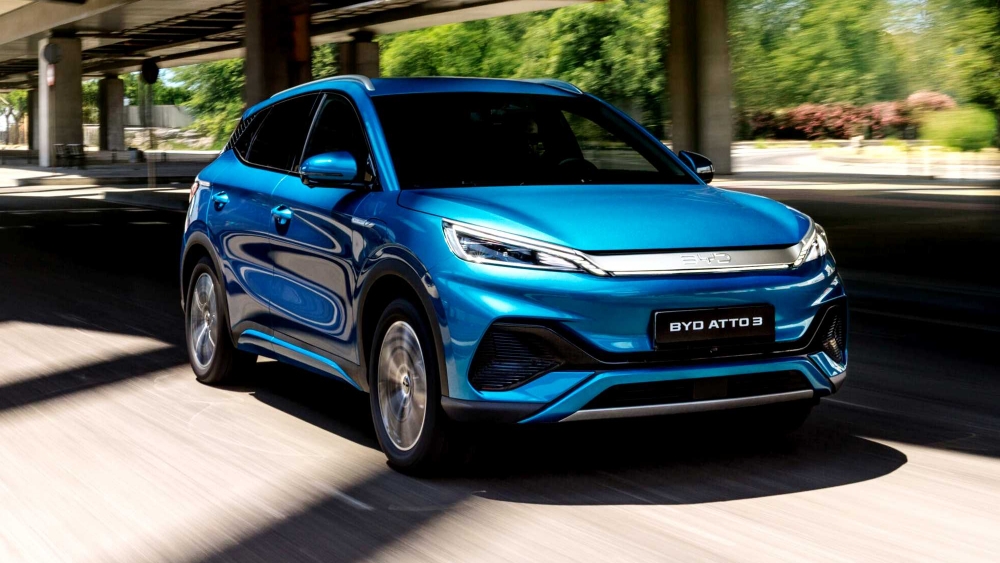
The Smart #3 is the model that differs the least from the certification. Five different models participated in this new round of testing: Tesla Model 3, BYD Atto 3, Tesla Model Y, Kia EV6, and Smart #3. The result is not surprising: each and every one of them recorded a range in real conditions that was lower than that declared in the laboratory, although the decrease varies considerably, ranging from 5% to 23% depending on the model. Going from best to worst, the Smart came out on top in the test. On paper, it claims a range of 455 km, but in the tests it managed to travel 432 km, so the difference is only 5%. In second place there is a tie. On the one hand, there is the Kia EV6, which reached 484 km out of the official 528 km, a decrease of 8%. The Tesla Model Y recorded the same percentage decrease, falling from the advertised 533 km to 490 km. Behind it is the Tesla Model 3, which, from an approved 513 km, was only able to travel 441 km, a decrease of 14%. However, the worst performer was the BYD Atto3, which claims a range of 480 km but only managed to travel 369 km, i.e., 23% less, almost a quarter of its stated range. These results are mainly due to the fact that the vehicles analyzed have higher energy consumption than stated, so the battery runs out sooner. However, among all of them, there is one that has achieved less real range than advertised, even though its consumption on the road has been lower than in the laboratory. This is the case of the Model Y, which on paper consumes 16.9 kWh/100 km, but in the tests remained at 16.7. Despite this, it achieved a lower range. After that, the best result was achieved by the EV6, with consumption increasing by 1% from 16.5 kWh/100 km to 16.6, followed by the Smart, which went from 16.3 to 17 kWh/100 km (+4%), then the Model 3, which rose from 13.2 to 14 kWh/100 km (+6%), and, once again, in last place was the BYD, which from the advertised 14.9 kWh/100 km actually recorded 18, an increase of 21%.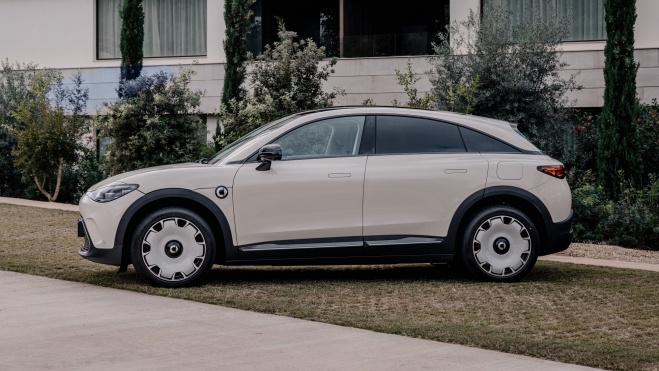
All have less range than advertised
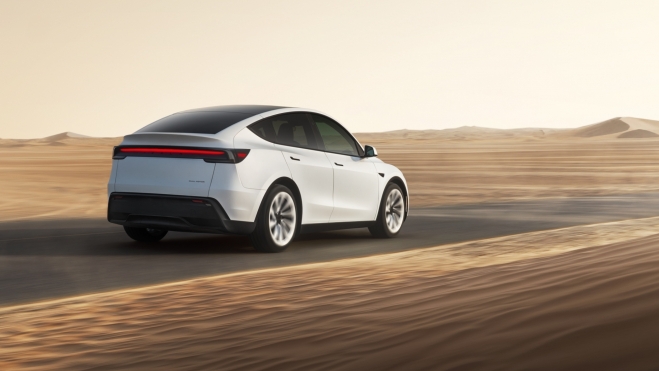
The actual consumption of the Tesla Model Y was lower than the certified consumption.
Tests that aim to help drivers
AAA CEO Michael Bradley said: “As more electric vehicles enter our market, our tests will help consumers understand which new competitors offer the same battery range. Our program will give confidence to Australian fleets and families looking to buy an electric vehicle.” Launched in 2023, the Real World Testing Program has already analyzed 114 cars with different types of combustion systems, and the conclusion is clear: consumers cannot always rely on laboratory tests carried out by manufacturers.
Its modus operandi is simple: it tests vehicles on a 93 km circuit, using test protocols based on European regulations and measuring the range of electric vehicles by quantifying both the energy required to drive the test route and the energy required to fully recharge each vehicle’s battery, as well as the energy consumption of each vehicle.
The price of the training is 250 euros.
The training is asynchronous online, you can do it at your own pace, whenever and from wherever you want, you set the schedule.
Classes are video recorded.
Start date: The training can be started whenever you want. Once payment is made, you have access to the training.
The training is in English, subtitles and syllabus avalaible.
Other subtitles and video syllabus available: Arabic, Chinese, French, German, Indonesian, Italian, Japanese, Korean, Persian, Portuguese, Russian, Spanish, Thai, Turkish, Vietnamese.
All syllabus has been developed by the teacher.
Fill out the following form to receive course information, or write an email to:
Contact.
- José Miguel Fernández Gómez.
- Email: info@advancedfleetmanagementconsulting.com
- Mobile phone: +34 678254874 Spain.
Course Features.
- The course is aimed at: managers, middle managers, fleet managers, any professional related to electric vehicles, and any company, organization, public administration that wants to switch to electric vehicles.
- Schedule: at your own pace, you set the schedule.
- Duration: 27 hours.
- Completion time: Once you have started the course you have 6 months to finish it.
- Materials: english slides and syllabus for each class in PDF.
- If you pass the course you get a certificate.
- Each class has a quiz to take.
- English language, subtitles and syllabus.
- Other subtitles and video syllabus available: Arabic, Chinese, French, German, Indonesian, Italian, Japanese, Korean, Persian, Portuguese, Russian, Spanish, Thai, Turkish, Vietnamese.
-
Start date: The course can be started whenever you want. Once payment is made, you have access to the course.
Price.
- 250 euros.
-
You can pay by bank transfer, credit card, or PayPal.
Goals.
- Know the most important aspects to take into account when electrifying a fleet of vehicles.
- Learn about electric vehicle technology.
- Know the polluting emissions that occur when a fleet of vehicles is electrified.
- Know what technologies are viable to electrify a fleet of vehicles.
- Learn about real cases of vehicle fleet electrification.
- Know the history of the electric vehicle.
Syllabus.
- History of electric vehicle.
- Battery electric vehicle.
- History of the lithium ion battery.
- Types of electric vehicle batteries.
- New electric vehicle battery materials.
- Other storage technologies of electric vehicle batteries.
- Battery components.
- Battery Management System-BMS.
- The use of rare earths in the electric vehicle.
- Fundamentals of the electric motor.
- Types of electric motors and their relationship to rare earths.
- Electric vehicle inverter: what it is and what it is used for.
- Battery degradation loss of autonomy.
- What is covered and not covered by the electric vehicle battery warranty.
- Battery passport.
- Battery fire of the electric vehicle.
- Causes, stages and risks of battery fire.
- Real cases of electric vehicle fire.
- Electric vehicle battery fire extinguishment.
- Measures to prevent, extinguish and control electric vehicle fires.
- Fire safety regulations for electric vehicle batteries.
- Impact of ambient temperature on battery performance.
- The electric vehicle brands most likely to breakdown due to high temperatures.
- Which emmits more Co2, an electric car or a car with an internal combustion engine.
- Plug-in electric hybrids, a solution or an obstacle to electrify the vehicle fleet?.
- Fleet electrification with hydrogen vehicles.
- Cybersecurity of charging points.
- The theft of copper in electric vehicle chargers.
- Incidents at electric car charging points and their possible solutions.
- Batery swapping.
- The second life of the battery of the EV at Rome airport.
- The tires of electric vehicles.
- Electric vehicle, artificial intelligence, and electricity demand.
- The case of Hertz electrification.
- The case of Huaneng: The world’s first electrified and autonomous mining fleet
- Consequences on the vehicle fleet of an electric vehicle brand going bankruptcy.
- E-fuels and synthetic fuels are not an alternative to decarbonize the vehicle fleet.
- How to avoid premature obsolescence of the fleet’s electric vehicles.
- Polluting emissions from brakes.
- Mileage manipulation to extinguish warranty early on electric vehicles.
- The importance of the electricity tariff in reducing electric vehicle costs.
- Taxi reality: Three true stories of electrification for economy.
- Electric vehicles cause more motion sickness than gasoline vehicles.
- Electric vehicle insurance and advanced driver assistance systems-ADAS.
- One-pedal driving: Risk of accidents.
Training teacher.
José Miguel Fernández Gómez is the manager of Advanced Fleet Management Consulting, a consulting company specialized in vehicle fleet management and the owner of the fleet management channel on YouTube AdvancedfleetmanagementTube.
Since 2007 I have been working in fleet management consultancy and training for all types of companies, organizations and public administrations. With this course I want to make my experience and knowledge acquired during my work and academic career in this discipline available to my clients.
I carry out consulting projects related to vehicle fleet management and collaborate with companies developing products/services in this market. I have worked at INSEAD (France), one of the best business schools in the world, as a Research Fellow at the Social Innovation Centre-Humanitarian Research Group.
I carried out consulting and research activities in a project for the United Nations refugee organization (UNHCR), optimizing the size and management of the activities of the vehicle fleet, which this organization has distributed throughout the world (6,500 vehicles).
I worked as a fleet manager for five years, for Urbaser, which managed the street cleaning service in Madrid (Spain). I managed a fleet of 1,000 vehicles, made up of various technologies and types of vehicles such as: heavy and light vehicles, vans, passenger cars or sweepers.
I have completed all my academic degrees at the Polytechnic University of Madrid, one of the best universities in Spain, my academic training is as follows:
I hold a PhD in Industrial Engineering, with international mention, since I carried out research stays at the University of Liverpool (UK) and at the Royal Institute of Technology-KTH (Sweden).
I am also an Industrial Engineer (Industrial Management) and an Mechanical Engineer, and I completed a Master’s Degree in Operations Management, Quality and Technological Innovation (Cepade) and another Master’s Degree in Industrial Management (UPM).
I have publications in indexed magazines and presentations at international industrial engineering conferences.
Cancellations and penalties.
Once the course has started, the amount will not be refunded.