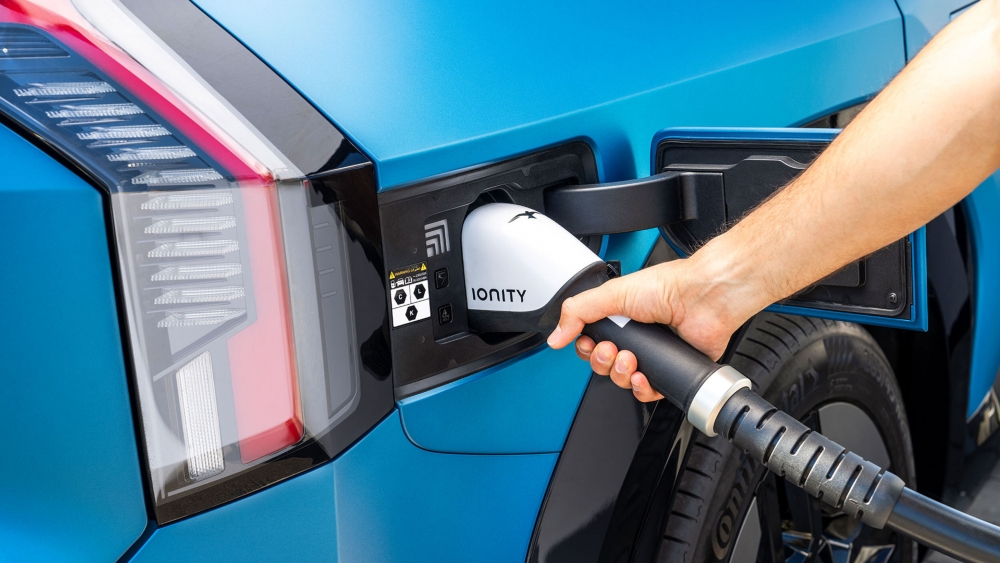
Charge to 80% or 100%? This is a common question among electric car users, but experts and manufacturers are clear on the answer.
Range and battery degradation are two issues that concern electric vehicle drivers. For this reason, many choose to charge their cars to 100% every day for peace of mind, even if they don’t need that much range on a daily basis. But is this good for the battery?
The reality is that experts in electric mobility and various brands in the sector have a clear answer, although there are some nuances, as daily routines are not the same as long journeys or vacations, where more miles are traveled.
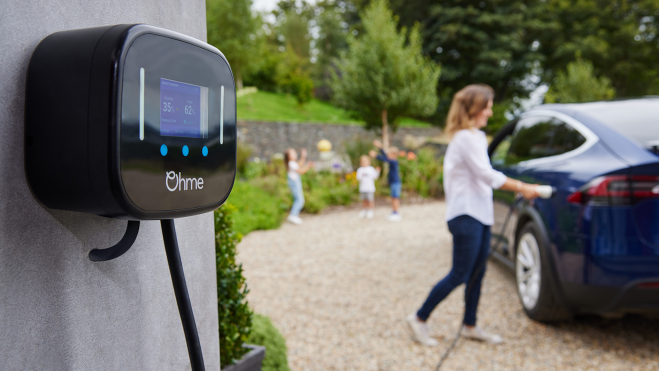
Charging at home is not the same as charging at a public charging point out of necessity.
The opinion of experts in electric mobility
Lithium-ion batteries suffer more stress when kept at extreme ranges, both above 90% and below 10%. “Frequent 100% charging, especially if the car is not going to be used immediately, can accelerate the chemical degradation of the battery,” explains David Buchmann, an energy storage systems engineer at Fraunhofer ISE, Europe’s largest solar research institute.
Lucía Dolera, head of batteries at the Business Association for the Development and Promotion of Electric Vehicles (AEDIVE), points out that “although today’s batteries are much better protected than they were a decade ago, overusing full charges on a daily basis is not recommended, especially if the car is left charging overnight.”
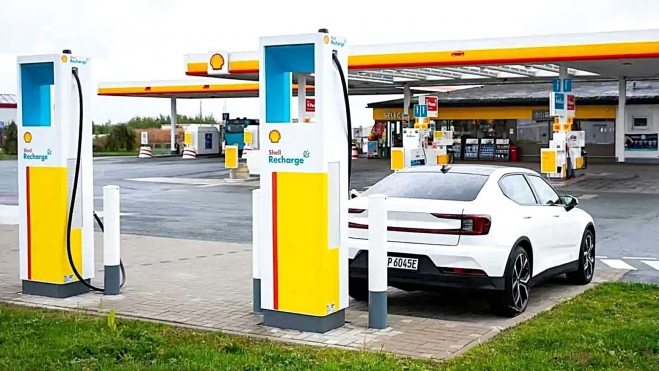
Many experts say that the outside temperature has a decisive influence.
On the other hand, some experts argue that it is not just how much you charge, but how and when. “Temperature has a decisive influence. If the car is charged to 100% in summer, in direct sunlight, and is left parked for several hours, that thermal stress is doubly harmful,” warns Sandra Infante, a researcher in energy storage at the IMDEA Energy Institute.
What is the opinion of car manufacturers?
A manufacturer specializing in electric cars such as Tesla recommends limiting daily charging to 80 or 90%, as stated in its app and vehicle manual. Something similar happens with Hyundai, which advises “keeping the charge between 20% and 80% in everyday use to extend the battery’s life,” according to its director of electric mobility in Europe, Michael Winkler.
In the case of BMW, the German manufacturer goes even further: “The technology already optimizes the health of the battery, but the more careful the user is, the better the long-term performance will be,” says Rainer Mehl, head of innovation at the BMW Group.
Renault also advises against charging to 100% in daily use. In its official guide for owners of the Renault Megane E-Tech electric car, the brand points out that “to preserve the longevity of the battery, it is advisable to keep the charge level between 20% and 80% for most regular journeys.”
There is an important ‘but’
All references to car brands regarding battery charging recommendations have a ‘but’. For example, Renault, mentioned in the previous paragraph, does advise charging to 100% when it comes to long journeys or if you need all the available range for any reason.
The same is true for Tesla, which also recommends charging to 100% on long journeys, and Mercedes-Benz: “Our vehicles are designed to reach 100% without any specific risk, but we recommend reserving this for when you need to use all available range.”
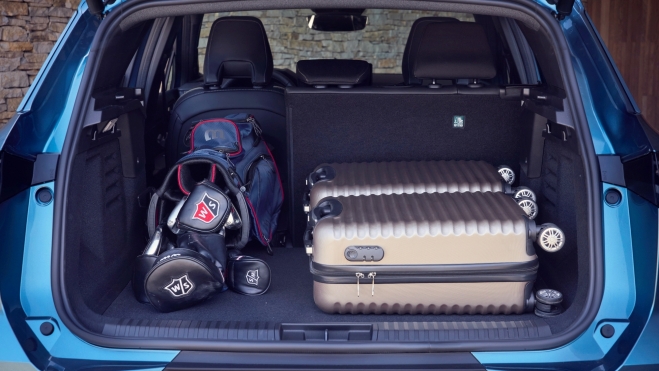
If you are going on a long journey, experts and manufacturers do recommend charging to 100%.
“Batteries suffer more the longer they remain at 100%. So it’s fine for trips, but it’s best to schedule charging so that it reaches 100% just before you leave,” explains David Buchholz, professor and energy storage researcher at the Technical University of Munich.
The price of the training is 250 euros.
The training is asynchronous online, you can do it at your own pace, whenever and from wherever you want, you set the schedule.
Classes are video recorded.
Start date: The training can be started whenever you want. Once payment is made, you have access to the training.
The training is in English, subtitles and syllabus avalaible.
Other subtitles and video syllabus available: Arabic, Chinese, French, German, Indonesian, Italian, Japanese, Korean, Persian, Portuguese, Russian, Spanish, Thai, Turkish, Vietnamese.
All syllabus has been developed by the teacher.
Fill out the following form to receive course information, or write an email to:
Contact.
- José Miguel Fernández Gómez.
- Email: info@advancedfleetmanagementconsulting.com
- Mobile phone: +34 678254874 Spain.
Course Features.
- The course is aimed at: managers, middle managers, fleet managers, any professional related to electric vehicles, and any company, organization, public administration that wants to switch to electric vehicles.
- Schedule: at your own pace, you set the schedule.
- Duration: 25 hours.
- Completion time: Once you have started the course you have 6 months to finish it.
- Materials: english slides and syllabus for each class in PDF.
- If you pass the course you get a certificate.
- Each class has a quiz to take.
- English language, subtitles and syllabus.
- Other subtitles and video syllabus available: Arabic, Chinese, French, German, Indonesian, Italian, Japanese, Korean, Persian, Portuguese, Russian, Spanish, Thai, Turkish, Vietnamese.
-
Start date: The course can be started whenever you want. Once payment is made, you have access to the course.
Price.
- 250 euros.
-
You can pay by bank transfer, credit card, or PayPal.
Goals.
- Know the most important aspects to take into account when electrifying a fleet of vehicles.
- Learn about electric vehicle technology.
- Know the polluting emissions that occur when a fleet of vehicles is electrified.
- Know what technologies are viable to electrify a fleet of vehicles.
- Learn about real cases of vehicle fleet electrification.
- Know the history of the electric vehicle.
Syllabus.
- History of electric vehicle.
- Battery electric vehicle.
- History of the lithium ion battery.
- Types of electric vehicle batteries.
- New electric vehicle battery materials.
- Other storage technologies of electric vehicle batteries.
- Battery components.
- Battery Management System-BMS.
- Fundamentals of the electric motor.
- Battery degradation loss of autonomy.
- What is covered and not covered by the electric vehicle battery warranty.
- Battery passport.
- Battery fire of the electric vehicle.
- Causes, stages and risks of battery fire.
- Real cases of electric vehicle fire.
- Electric vehicle battery fire extinguishment.
- Measures to prevent, extinguish and control electric vehicle fires.
- Fire safety regulations for electric vehicle batteries.
- Impact of ambient temperature on battery performance.
- Which emmits more Co2, an electric car or a car with an internal combustion engine.
- The use of rare earth earths in the electric vehicle.
- Plug-in electric hybrids, a solution or an obstacle to electrify the vehicle fleet?.
- Fleet electrification with hydrogen vehicles.
- Cybersecurity of charging points.
- The theft of copper in electric vehicle chargers.
- Incidents at electric car charging points and their possible solutions.
- Batery swapping.
- The tires of electric vehicles.
- Electric vehicle, artificial intelligence, and electricity demand.
- The case of Hertz electrification.
- The case of Huaneng: The world’s first electrified and autonomous mining fleet.
- Consequences on the vehicle fleet of an electric vehicle brand going bankruptcy.
- E-fuels and synthetic fuels are not an alternative to decarbonize the vehicle fleet.
- How to avoid premature obsolescence of the fleet’s electric vehicles.
- Polluting emissions from brakes.
- Mileage manipulation to extinguish warranty early on electric vehicles.
- The importance of the electricity tariff in reducing electric vehicle costs.
- Electric vehicles cause more motion sickness than gasoline vehicles.
Training teacher.
José Miguel Fernández Gómez is the manager of Advanced Fleet Management Consulting, a consulting company specialized in vehicle fleet management and the owner of the fleet management channel on YouTube AdvancedfleetmanagementTube.
Since 2007 I have been working in fleet management consultancy and training for all types of companies, organizations and public administrations. With this course I want to make my experience and knowledge acquired during my work and academic career in this discipline available to my clients.
I carry out consulting projects related to vehicle fleet management and collaborate with companies developing products/services in this market. I have worked at INSEAD (France), one of the best business schools in the world, as a Research Fellow at the Social Innovation Centre-Humanitarian Research Group.
I carried out consulting and research activities in a project for the United Nations refugee organization (UNHCR), optimizing the size and management of the activities of the vehicle fleet, which this organization has distributed throughout the world (6,500 vehicles).
I worked as a fleet manager for five years, for Urbaser, which managed the street cleaning service in Madrid (Spain). I managed a fleet of 1,000 vehicles, made up of various technologies and types of vehicles such as: heavy and light vehicles, vans, passenger cars or sweepers.
I have completed all my academic degrees at the Polytechnic University of Madrid, one of the best universities in Spain, my academic training is as follows:
I hold a PhD in Industrial Engineering, with international mention, since I carried out research stays at the University of Liverpool (UK) and at the Royal Institute of Technology-KTH (Sweden).
I am also an Industrial Engineer (Industrial Management) and an Mechanical Engineer, and I completed a Master’s Degree in Operations Management, Quality and Technological Innovation (Cepade) and another Master’s Degree in Industrial Management (UPM).
I have publications in indexed magazines and presentations at international industrial engineering conferences.
Cancellations and penalties.
Once the course has started, the amount will not be refunded.