

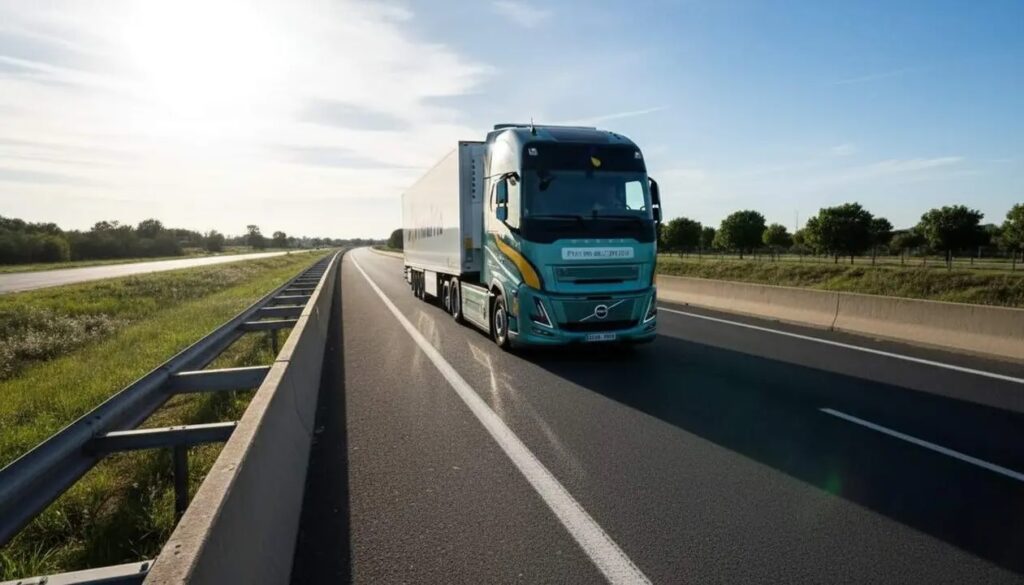
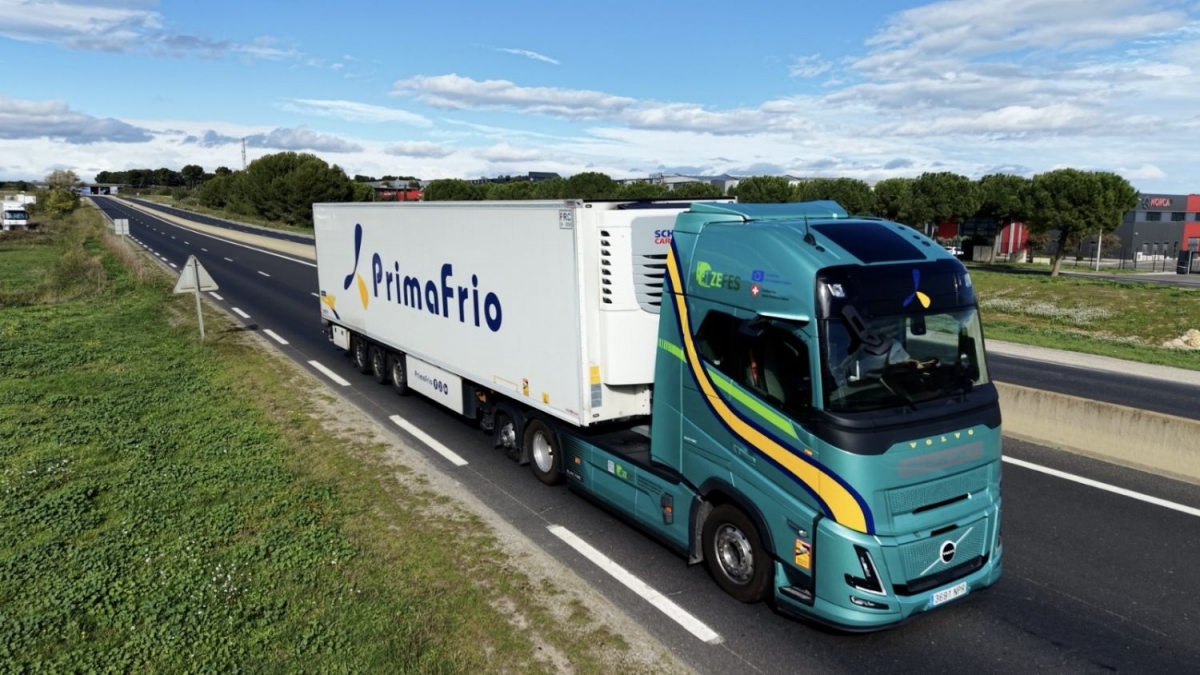
An electric truck has successfully transported refrigerated goods from Murcia, Spain, to Sweden, covering 2,800 kilometers across several European countries. The operation, carried out by the Spanish firm Grupo Primafrio using a Volvo FH Aero Electric, spanned five days and required eleven battery-recharging stops to maintain the required controlled temperature for a cargo of fruits and vegetables.
The test was conducted as part of the European ZEFES project, which primarily aims to study the feasibility of heavy-duty transport without direct tailpipe emissions on international routes. According to a statement issued by Primafrio on November 16, 2026, the journey was completed with a total vehicle mass of 45 tonnes. The company views this as a pioneering endeavor in the transport of fresh produce, although it has not been independently verified as the first operation of its kind.
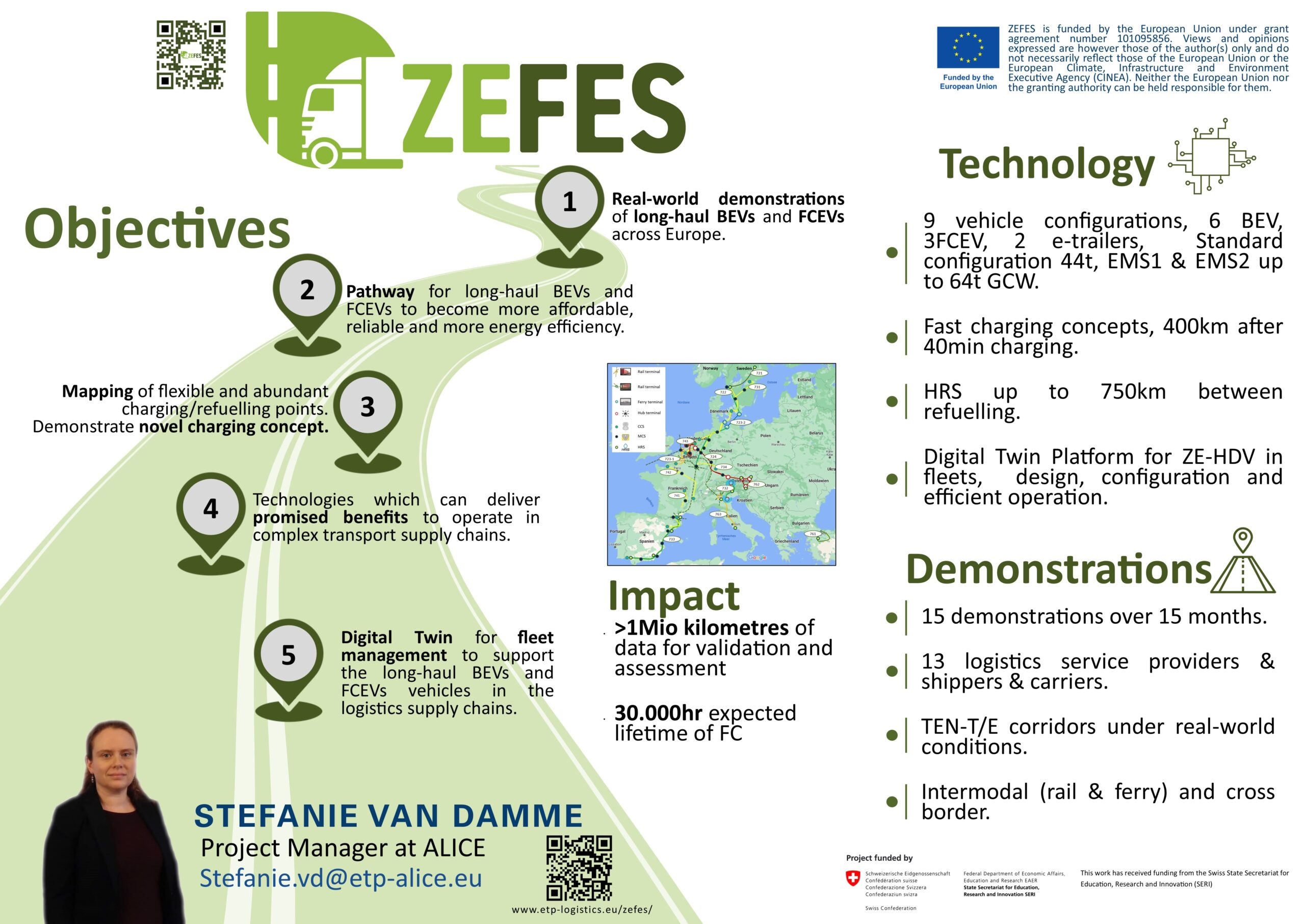
A five-day journey to test range and recharging capabilities.
The vehicle belongs to the Volvo FH Aero Electric family, which includes a long-range variant capable of traveling up to 700 kilometers on a single charge under optimal conditions. This configuration features an electric axle that allows for additional battery capacity, reaching up to 780 kWh. However, Primafrio has not confirmed the specific configuration of the truck used for this trip.
After departing from Murcia, the route took the truck through France, Luxembourg, and Germany. It then departed from the German port of Travemünde, bound for Malmö, before continuing by road to Halmstad. The eleven scheduled recharges equate to roughly one stop every 255 kilometers. Nevertheless, the company has not disclosed the locations of the charging stations, the duration of the charging sessions, or the energy consumption recorded.
Volvo states that its long-range version will require approximately 50 minutes to charge from 20% to 80% of its capacity when using a 700 kW MCS charger. With a 350 kW CCS connection, this process takes approximately 85 minutes. These official figures from the manufacturer should not be confused with the actual times recorded during this test, the results of which have yet to be published.
Primafrio has calculated that an equivalent round-trip operation, covering approximately 5,600 kilometers, would avoid the emission of about 4.1 tonnes of CO2 compared to a diesel-powered truck. However, the information released to date covers only the outbound leg of the journey; therefore, this estimate does not represent a verified total for a complete round trip. Furthermore, no information has been provided regarding electricity costs or the energy required to power the refrigeration system.
Europe is accelerating the electrification of heavy-duty transport, though diesel remains dominant.
The experience of Primafrio aligns with other trials conducted in Spain. The Murcia-based company, in collaboration with Scania, is participating in the validation of an electric corridor between Murcia and France. This corridor will utilize a tractor unit with a range of over 450 kilometers, compatible with both CCS2 and MCS charging systems. Meanwhile, Disfrimur has integrated MAN eTGX trucks into its operations in eastern Spain, as part of a strategy that includes new high-power charging solutions.
Despite the progress made, the electrification of heavy-duty tractor units remains a niche practice. According to the latest data from Eurostat—published by the German statistical office, Destatis—only 1.6% of tractor units registered in the European Union in 2025 were fully electric; this follows a figure of 0.7% recorded the previous year. Diesel accounted for 94.7% of new registrations, while electric rigid trucks reached a 7.7% share.
The European Union has signaled its intent to expedite this transition through specific CO2 emission reduction targets for new heavy-duty vehicles covered by the regulations: a 45% reduction by 2030, 65% by 2035, and 90% from 2040 onwards. Furthermore, the AFIR (Alternative Fuels Infrastructure Regulation) mandates the establishment of a network of truck-specific charging stations by the end of 2030, requiring facilities with a capacity of at least 3,600 kW to be located no more than 60 kilometers apart along both directions of the trans-European transport core network. The route between Murcia and Sweden serves as a practical demonstration of the capability of electric trucks to handle certain international shipments of refrigerated goods.
However, the economic viability of these operations remains to be evaluated—particularly regarding charging times, the availability of infrastructure, and the additional energy consumption required to maintain the cold chain. The results obtained by Primafrio as part of the ZEFES project will allow for comparisons between the factors involved here and those associated with conventional operations using diesel-powered trucks.
Written by José Miguel Fernández Gómez.