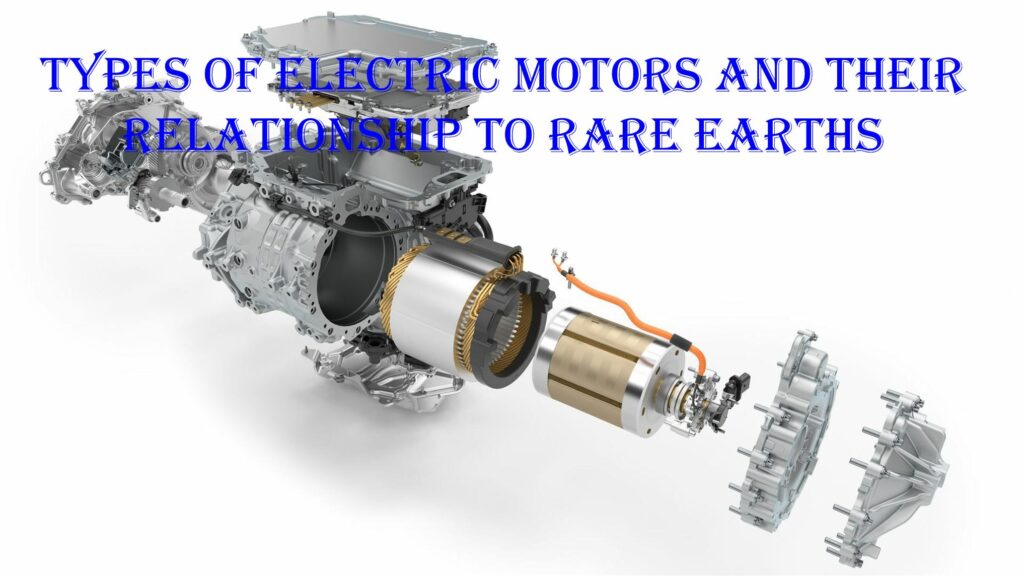
The class develops the types of electric motors, their relationship with rare earths, and the implications for fleet management.
Slide 2. Types of electric motors and their relationship with rare earths.
History of the electric motor.
The electric motor predates the internal combustion engine. The theory that forms the basis of modern industry was developed by the English physicist Michael Faraday. He discovered that magnetism produces electricity through motion and provided the foundations for the theory of electromagnetism.
In 1821, Faraday built two devices designed to produce what he called electromagnetic rotation. Later, under this name, he published the results of his work, which describes the principle of what we know today as an electric motor.
In 1831, he discovered electromagnetic induction, a discovery that laid the foundation for the development of generators. The first direct current motor was manufactured and patented by Thomas Davenport in 1837. On the other hand, the paternity of the alternating current motor is disputed between Galileo Ferraris, Michail Ossipowitsch Doliwo-Dobrowolski and Nikola Tesla, the first patent being that of Nikola Tesla in 1887.
Electric motors are based on the principle of electromagnetic rotation, discovered by Faraday. The phenomenon of attraction or repulsion between two magnets depends on the alignment of their magnetic poles. In the context of an electric motor, electricity is used to generate magnetic fields of opposite nature. As a result of this process, the rotating part, called the rotor, moves relative to the static part, known as the stator.
The rotor is equipped with wiring, called a coil, whose magnetic field is opposite to that of the stator. This configuration generates a fixed longitudinal magnetism, which is created through the use of inductors or permanent magnets. Thus, with each of the opposing magnetic fields, the rotor begins to rotate within the stator. However, it is precisely at this point where significant challenges arise.
As soon as the rotor and stator poles are aligned, the motor will come to a standstill. For the rotor to maintain its rotation within the stator, it is imperative to reverse the polarity of the rotor magnets.
This result is achieved by connecting the rotor coils to a rotating commutator. This device ensures the stability of the transverse direction of the magnetism as the rotor rotates. In this way, the magnetisms between the stator and rotor are never properly aligned, resulting in the rotor’s continuous spinning.
- Synchronous motor and asynchronous motor.
In the field of electrical technology, two main categories of motors are distinguished: synchronous motors and asynchronous motors. Both motors have the ability to operate interchangeably as motors or generators, making them a versatile solution adaptable to various needs.
- The synchronous motor.
This is the most widely used and easy to understand. The motor is composed of a wound stator and a rotor equipped with permanent magnets. The controller sends voltage to the stator coils, thus creating a magnetic field in each of them. The closer these coils are to each other, the better the performance.
The rotor has its own magnetic field. Since opposite poles attract and unlike poles repel, the rotor aligns with the stator field. The voltage transmitted by the controller to the stator is alternating in nature, resulting in the rotation of the magnetic fields within it. Since the rotor aligns with the stator field, which is rotating, the rotor will rotate with it.
The speed at which the magnetic field rotates determines the rotor’s rotation speed, provided it has the necessary torque. If you want to lock it, simply leave the field fixed and it will not move.
This phenomenon is called synchronous because it rotates at the same speed as the electromagnetic field, mirroring the rotation as long as it can overcome the load resistance.
- The asynchronous motor.
The asynchronous motor is governed by Faraday’s principle of mutual induction. When three-phase alternating current is applied to the inductor coils, a rotating magnetic field is generated, called a rotating field, whose frequency is equivalent to that of the alternating current supplying the motor.
This field, when rotating around the rotor at rest, induces electrical voltages that generate currents in it. These, in turn, generate a magnetic field that replicates the motion of the stator field, thus producing a torque that rotates the rotor by the principle of mutual induction.
However, it is important to note that induction in the rotor only occurs if there is a difference between the relative speeds of the stator and rotor.
Therefore, the rotor speed will never reach that of the rotating field. If both speeds were equal, no induction would be generated and the rotor would not produce torque.
The difference in speeds is called “slip” and is measured in percentage terms. For this reason, induction motors are called “asynchronous” because the rotor speed differs slightly from that of the rotating field.
Slip varies depending on the mechanical load applied to the rotor, reaching its maximum level when the highest load is applied. However, despite this, the motor’s speed barely varies, but the torque and, therefore, the current consumed remain constant. Therefore, it can be concluded that these are constant-speed motors.
From a technical perspective, an asynchronous motor is defined as an electrical transformer, whose stator windings represent the primary winding and the rotor windings are equivalent to the secondary winding of a short-circuited transformer.
This aspect constitutes a clear advantage for the motor in question. A constant three-phase voltage is sufficient to start the motor and maintain it at the optimal speed for its performance. During the start-up phase, a significant difference in rotational speed is observed, which translates into a significantly higher torque. Once the motor reaches operating speed, energy consumption is minimal.
Controlling an induction motor is more complex compared to a permanent magnet motor. The calculation of the voltage and frequency required by the controller is carried out by using mathematical vectors, which is known as “vector control”.
- Technological differences between synchronous and asynchronous motors.
A synchronous electric motor generally incorporates permanent magnets composed of rare earth elements, such as dysprosium, gadolinium, or neodymium. These magnets provide magnetic flux when magnetized by another magnetic field and do not lose their properties once the source of the magnetism ceases.
Embedded in the motor’s rotor, they dispense with the use of an external excitation system and brushes, which are necessary to generate the corresponding magnetic field in the rotor and promote its rotation when exposed to the externally generated field in the stator.
Motors without permanent magnets require the use of an external electric current, which often requires copper wiring, slip rings, and a power supply to generate a magnetic field in the rotor. Although they are more economical, their efficiency is lower and they require a higher-capacity battery, which reduces runtime.
Certainly, the main competitive advantage of permanent magnet motors lies in their greater efficiency and smaller size. Compared to externally excited motors, these allow precise control of the power of the magnet generated in the rotor, which in turn allows for optimal regulation of torque requirements at all times. On the other hand, the motors become more bulky due to the additional components required for the magnetic field power supply system.
Most manufacturers opt for the use of synchronous motors, either permanent magnet or electromagnet. The choice between the two is determined by the required performance. In the case of the Model 3, Tesla has opted to implement permanent magnet motors, in contrast to the induction motors with electromagnets used in the Model X and Model S.
- Types of electric motors in electric vehicles.
- Asynchronous or induction motor.
This type of electric motor, primarily used in vehicles, is characterized by the fact that the rotor does not rotate at the same speed as the magnetic field generated by the stator. In other words, the magnetic field always runs a few degrees ahead of the rotor.
This type of motor operates using alternating current, which can be three-phase or single-phase. In the first case, a rotating magnetic field (RMF) is generated, while in the second, the magnetic field is alternating.
Its use is justified by its simplicity and low cost, as well as the reduced noise and vibrations it generates, making it the ideal electric motor if you are looking for a vehicle with maximum efficiency and reliability.
- Switched or variable reluctance synchronous motor.
Known as a variable reluctance synchronous motor, this motor is equipped with a rotor with metallic components in which current is generated through the coils. These motors offer high levels of torque and power, especially at high speeds, and are robust and economical. However, their efficiency is compromised at low speeds. These motors are characterized by their durability and competitiveness in terms of production costs.
- Permanent magnet synchronous motor.
They have a constant rotor speed, which corresponds to the magnetic field generated by the stator. Within these, two main categories can be distinguished: radial flux and axial flux, depending, in each case, on the position of the induction magnetic field.
Their typical application is in vehicles equipped with hybrid mechanics, where a series of magnets are powered on each phase of the stator. These devices are completely silent and robust, and require no maintenance. Furthermore, it should be noted that they are lightweight and highly efficient at low revs.
- Permanent magnet brushless motor.
They use direct current to operate, and are commonly used in hybrid vehicles. Their operation is based on the use of permanent magnets located in the rotor, which are sequentially powered in each phase of the stator. They are expensive and have low power, yet offer great robustness, require no maintenance, and are quiet.
- Rare earths in electric motors.
Induction or asynchronous motors are characterized by their internal structure, consisting of a cage of vertical or slightly inclined bars, joined by rings at both ends. These bars are made of aluminum or copper, depending on the specific motor configuration. The core of this cage is made of multiple layers of low-carbon steel, as it has better magnetic properties.
To optimize performance, it is recommended to completely build the system with copper. Copper is a relatively abundant metal, affordable, and very easily recycled.
Regarding synchronous motors, it is important to note that they use neodymium-based permanent magnets. This compound was developed in 1983.
Since then, this compound of neodymium, iron, and boron (Nd2Fe14B) has become the standard for quality magnets due to its high magnetic field concentration. The arrival of this material has revolutionized the field of electric motors. With these highly concentrated magnets, two main approaches have been explored: Reducing size while maintaining power, or maintaining a similar size while increasing power.
The induction motor is not affected by temperature changes unless the melting temperature of the copper wire varnish is exceeded. Otherwise, no problems are expected. If acceleration occurs, there is no cause for concern. The problem would arise if this occurred constantly. Electric motors in automobiles commonly have cooling systems, however, the heat generated inside can be difficult to extract, due to the impossibility of the rotor coming into contact with the cooling circuit.
For a permanent magnet motor, heat poses a significant challenge that requires meticulous attention. It is crucial to note that applying heat to a magnet can cause the loss of its magnetic properties. It should be noted that if the temperature is excessively high, there is a possibility of permanent deterioration in the magnet’s functionality. Therefore, it is imperative to have magnets that do not experience changes in their magnetic field with increases in temperature.
We have a new definition: coercivity. This term refers to the intrinsic ability of a material to preserve its magnetic properties even with significant increases in temperature. While it is easy to not exceed a magnet’s critical temperature limit and cause it to permanently lose its properties, maintaining those properties at all times is a more complex task. Increasing the coercivity of neodymium magnets is achieved by incorporating additional rare earth elements, such as terbium or dysprosium.
Within the field of inorganic chemistry, “rare earths” are defined as the group of 17 chemical elements, including the 15 lanthanides, as well as scandium and yttrium. Despite their name, not all of them are excessively difficult to find. The extraction process for these minerals is complicated due to their association with ores and the presence of radioactive elements, which further complicates cleaning operations, which become costly and polluting.
Neodymium is among the most abundant rare earths, although this is not the case with terbium or dysprosium. Another relevant aspect regarding rare earths is that the majority of global production originates in China. Interestingly, its deposits generally do not contain radioactive elements, making them more competitive compared to other locations.
Neodymium mining has become imperative, given its growing value in modern industry. Neodymium, previously considered a rare metal, has become a strategic material of increasing importance in various industrial and technological applications. To make matters worse, rare earths are extremely difficult to recycle.
- Vehicle manufacturers are developing synchronous electric motors without permanent magnets or rare earths.
This represents a significant innovation in the sector. However, it is important to note that this development entails three aspects that must be considered.
- They require extra current to power the rotor.
If an electric current is applied to a conductor coil, it will generate a magnetic field, just as a magnet would, so it would also serve the rotor.
Certainly, any change in energy state involves a loss. In this case, this loss manifests itself in the rotor coils. BMW has reported that its motor exhibits remarkable efficiency, achieving 93% energy utilization. This result raises the question of whether it is limited solely to the motor or whether it considers the losses associated with the rotor coils.
- Since the rotor requires electrical current but is rotating, we need brushes to transmit the electrical current.
These brushes are not made of carbon, but of noble metals such as gold, which guarantees excellent electrical conductivity. Over time, they will need to be replaced due to the inevitable wear they experience.
- To generate the same magnetic field as a neodymium magnet, a coil must have a surface area five times larger.
This means that the cross section of a wound rotor is five times larger than that of a permanent magnet.
Synchronous motors without rare earths have more complex technology, lower energy efficiency, are bulkier, and more expensive.
- Why permanent magnet motors remain the dominant technology.
There are two main factors that determine the selection of motor technology.
- Performance.
Rare earth permanent magnet motors are characterized by the highest power and torque density, efficiency, and low manufacturing costs.
Of course, the main drawback lies in the cost of materials, as magnets typically account for approximately one-third of the total cost of motor components.
- Cost.
Since their peak in 2022, rare earth prices have stabilized, allowing permanent magnet motors to become cost-competitive again and reducing the need for alternatives.
Unless there is a significant improvement in rare-earth-free magnets or a major regulatory push, rare-earth permanent magnet motors are likely to retain the majority of the market share, especially considering that China is the largest EV market and has less incentive to shift away from rare earths.
- Improvement of electric motors.
Most electric vehicles manufacturers develop their own electric motors, suggesting the potential for further improvements. In any case, there is the potential for a significant breakthrough that could provide a commercial advantage over other brands.
The implementation of lighter materials in engine manufacturing, the optimization of engine performance for each vehicle, for passenger cars, heavy-duty vehicles, and light industrial applications, among others, and alternatives to rare earths are some notable examples of improvements in electric motors.
It is clear that one of the aspects susceptible to optimization is energy management. In an electric motor, torque and rotational speed determine its consumption, while maximum power is necessary for performance.
Efficient management of these parameters contributes significantly to extending battery life. Furthermore, room for improvement has been identified in the cooling system of motors and batteries, especially when these components are in high demand.
Likewise, room for improvement has been identified in the packaging of the motors, i.e., their configuration. In the case of the Honda NSX, an innovative approach has been implemented by incorporating two smaller electric motors on the front axle, instead of relying on a single motor.
In this way, the torque distribution and regenerative braking function is significantly more efficient, as each of the two motors can operate independently of the other. While one sends power to the wheel with the greatest traction capacity, the other applies regenerative braking.
- Implications for fleet management.
The technical characteristics of the battery and the range are the most important aspects when purchasing an electric vehicle, because.
The battery is the most important component of an electric vehicle because it stores energy and can cost up to 30-35% of the total cost of the vehicle.
The technical characteristics and type of electric motor are a secondary consideration, often overlooked and overlooked when purchasing an electric vehicle.
Furthermore, the type of electric motor cannot be chosen, but the following measures are recommended when purchasing an electric vehicle whenever possible.
- Rare earths.
Electric motors should be purchased with the lowest possible amount of rare earths, or without any rare earths, due to the pollution generated by the extraction and processing of rare earths.
- Synchronous motors are more efficient than asynchronous motors.
Vehicles with synchronous motors are recommended over asynchronous motors because they are more energy efficient.
The efficiency of a synchronous or permanent magnet motor reaches 93%, while the efficiency of an asynchronous motor reaches 85%, a difference of 8%.
The actual range is about half of this value, varying greatly from model to model.
With the same battery capacity, a synchronous motor can travel more kilometers than an asynchronous motor.
- Asynchronous motors are more economical than synchronous motors.
However, since the vehicle’s electric motor cannot be selected, this is not a real advantage, it is included in the price of the electric vehicle.
The vehicle manufacturer chooses the electric motor depending on the vehicle’s use, for example, motors that offer high performance and fast response may be required.
- Temperature.
High temperatures in the electric motor can cause breakdowns.
Repeated and very frequent starts without rest periods, and sudden and repeated accelerations over time, can progressively raise the stator temperature and compromise the lifespan of the stator windings, even causing failures due to insulation melting.
Drivers must be trained to avoid repeated and very frequent starts without rest periods, and sudden and repeated accelerations over time.
Slide 3. Thank you for your time.
The class has developed the types of electric motors, their relationship with rare earths, and the implications for fleet management, see you soon.
Bibliography.
https://convertronic.net/noticias/tecnologia/12381-los-motores-sin-tierras-raras-pasan-a-un-segundo-plano-en-los-vehiculos-electricos.html
https://www.hibridosyelectricos.com/coches/fabricantes-prescinden-tierras-raras-motores-coches-electricos_47093_102.html
https://miguelleon.es/noticias/93-tipos-de-motores-en-autos-electricos-una-guia-completa.html
https://www.motorpasion.com/tecnologia/los-motores-son-tambien-clave-en-el-desarrollo-del-coche-electrico-no-todo-es-cuestion-de-baterias
https://www.rodesrecambios.es/blog/motores/tipos-de-motores/tipos-de-motores-presentes-en-automoviles-electricos/?srsltid=AfmBOoqVP17J8M0M5StQmfbpaC4lCbq99i2jKUM_29RWYQo_eDvB3Q7-
https://es.wikipedia.org/wiki/Motor_as%C3%ADncrono
The price of the training is 250 euros.
The training is asynchronous online, you can do it at your own pace, whenever and from wherever you want, you set the schedule.
Classes are video recorded.
Start date: The training can be started whenever you want. Once payment is made, you have access to the training.
The training is in English, subtitles and syllabus avalaible.
Other subtitles and video syllabus available: Arabic, Chinese, French, German, Indonesian, Italian, Japanese, Korean, Persian, Portuguese, Russian, Spanish, Thai, Turkish, Vietnamese.
All syllabus has been developed by the teacher.
Fill out the following form to receive course information, or write an email to:
Contact.
- José Miguel Fernández Gómez.
- Email: info@advancedfleetmanagementconsulting.com
- Mobile phone: +34 678254874 Spain.
Course Features.
- The course is aimed at: managers, middle managers, fleet managers, any professional related to electric vehicles, and any company, organization, public administration that wants to switch to electric vehicles.
- Schedule: at your own pace, you set the schedule.
- Duration: 27 hours.
- Completion time: Once you have started the course you have 6 months to finish it.
- Materials: english slides and syllabus for each class in PDF.
- If you pass the course you get a certificate.
- Each class has a quiz to take.
- English language, subtitles and syllabus.
- Other subtitles and video syllabus available: Arabic, Chinese, French, German, Indonesian, Italian, Japanese, Korean, Persian, Portuguese, Russian, Spanish, Thai, Turkish, Vietnamese.
-
Start date: The course can be started whenever you want. Once payment is made, you have access to the course.
Price.
- 250 euros.
-
You can pay by bank transfer, credit card, or PayPal.
Goals.
- Know the most important aspects to take into account when electrifying a fleet of vehicles.
- Learn about electric vehicle technology.
- Know the polluting emissions that occur when a fleet of vehicles is electrified.
- Know what technologies are viable to electrify a fleet of vehicles.
- Learn about real cases of vehicle fleet electrification.
- Know the history of the electric vehicle.
Syllabus.
- History of electric vehicle.
- Battery electric vehicle.
- History of the lithium ion battery.
- Types of electric vehicle batteries.
- New electric vehicle battery materials.
- Other storage technologies of electric vehicle batteries.
- Battery components.
- Battery Management System-BMS.
- The use of rare earths in the electric vehicle.
- Fundamentals of the electric motor.
- Types of electric motors and their relationship to rare earths.
- Electric vehicle inverter: what it is and what it is used for.
- Battery degradation loss of autonomy.
- What is covered and not covered by the electric vehicle battery warranty.
- Battery passport.
- Battery fire of the electric vehicle.
- Causes, stages and risks of battery fire.
- Real cases of electric vehicle fire.
- Electric vehicle battery fire extinguishment.
- Measures to prevent, extinguish and control electric vehicle fires.
- Fire safety regulations for electric vehicle batteries.
- Impact of ambient temperature on battery performance.
- The electric vehicle brands most likely to breakdown due to high temperatures.
- Which emmits more Co2, an electric car or a car with an internal combustion engine.
- Plug-in electric hybrids, a solution or an obstacle to electrify the vehicle fleet?.
- Fleet electrification with hydrogen vehicles.
- Cybersecurity of charging points.
- The theft of copper in electric vehicle chargers.
- Incidents at electric car charging points and their possible solutions.
- Batery swapping.
- The second life of the battery of the EV at Rome airport.
- The tires of electric vehicles.
- Electric vehicle, artificial intelligence, and electricity demand.
- The case of Hertz electrification.
- The case of Huaneng: The world’s first electrified and autonomous mining fleet
- Consequences on the vehicle fleet of an electric vehicle brand going bankruptcy.
- E-fuels and synthetic fuels are not an alternative to decarbonize the vehicle fleet.
- How to avoid premature obsolescence of the fleet’s electric vehicles.
- Polluting emissions from brakes.
- Mileage manipulation to extinguish warranty early on electric vehicles.
- The importance of the electricity tariff in reducing electric vehicle costs.
- Taxi reality: Three true stories of electrification for economy.
- Electric vehicles cause more motion sickness than gasoline vehicles.
- Electric vehicle insurance and advanced driver assistance systems-ADAS.
- One-pedal driving: Risk of accidents.
Training teacher.
José Miguel Fernández Gómez is the manager of Advanced Fleet Management Consulting, a consulting company specialized in vehicle fleet management and the owner of the fleet management channel on YouTube AdvancedfleetmanagementTube.
Since 2007 I have been working in fleet management consultancy and training for all types of companies, organizations and public administrations. With this course I want to make my experience and knowledge acquired during my work and academic career in this discipline available to my clients.
I carry out consulting projects related to vehicle fleet management and collaborate with companies developing products/services in this market. I have worked at INSEAD (France), one of the best business schools in the world, as a Research Fellow at the Social Innovation Centre-Humanitarian Research Group.
I carried out consulting and research activities in a project for the United Nations refugee organization (UNHCR), optimizing the size and management of the activities of the vehicle fleet, which this organization has distributed throughout the world (6,500 vehicles).
I worked as a fleet manager for five years, for Urbaser, which managed the street cleaning service in Madrid (Spain). I managed a fleet of 1,000 vehicles, made up of various technologies and types of vehicles such as: heavy and light vehicles, vans, passenger cars or sweepers.
I have completed all my academic degrees at the Polytechnic University of Madrid, one of the best universities in Spain, my academic training is as follows:
I hold a PhD in Industrial Engineering, with international mention, since I carried out research stays at the University of Liverpool (UK) and at the Royal Institute of Technology-KTH (Sweden).
I am also an Industrial Engineer (Industrial Management) and an Mechanical Engineer, and I completed a Master’s Degree in Operations Management, Quality and Technological Innovation (Cepade) and another Master’s Degree in Industrial Management (UPM).
I have publications in indexed magazines and presentations at international industrial engineering conferences.
Cancellations and penalties.
Once the course has started, the amount will not be refunded.