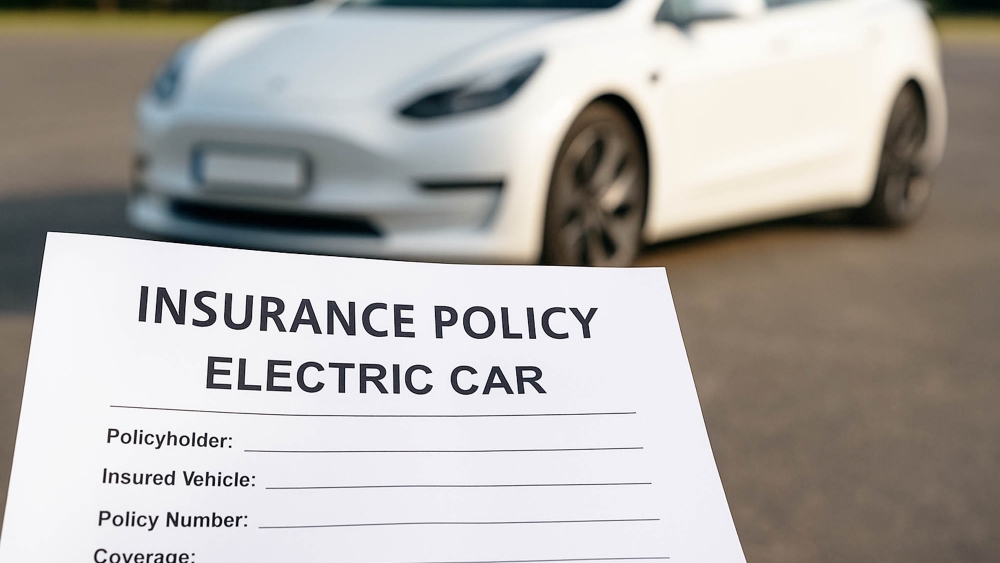
Electric cars with advanced driver assistance systems (ADAS) can cause insurance premiums to skyrocket: here’s why.
The technological revolution in the automotive sector has brought with it a new generation of vehicles equipped with sensors, cameras, and advanced driver assistance systems (ADAS). Although these features improve safety, they are also causing a considerable increase in insurance prices, especially for electric cars.
According to a recent study by the insurance company AXA, vehicles equipped with ADAS can increase the cost of insurance by up to 40% compared to equivalent models without this technology. The main reason: higher repair costs due to the sophistication of the integrated sensors and cameras, which are often located in exposed areas such as bumpers, windshields, or rearview mirrors.
What are ADAS systems and why do they make insurance more expensive?
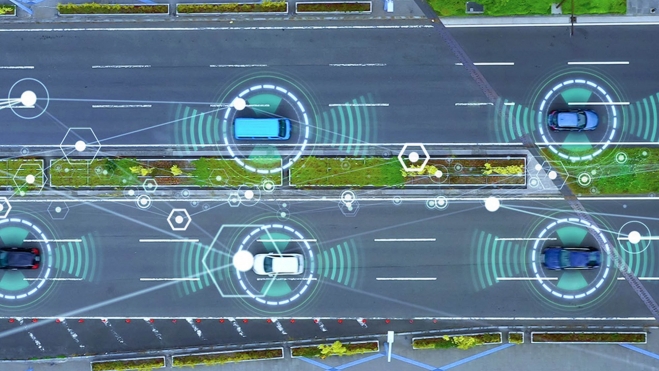
ADAS (Advanced Driver Assistance Systems) technologies include features such as autonomous emergency braking, lane keeping, adaptive cruise control, and pedestrian detection. More and more electric models, from compact cars to SUVs, are incorporating them as standard or as part of optional packages.
These systems rely on a network of sensors, cameras, and radars that collect real-time data to prevent accidents. However, in the event of a collision, even a minor one, replacing these components is very expensive.
For example, a camera located on the windshield can cost between $600 and $1,000, not including subsequent calibration. A front radar, common in autonomous braking functions, can add another $1,200 to the bill. A simple bump to the bumper, where proximity or blind spot sensors are located, can cost more than $2,000 to repair.
According to the comparison site Rastreator, this type of repair has led to an average increase of 25% in insurance policies for electric cars with advanced ADAS in the last two years.
And what about electric cars?
Electric cars not only incorporate ADAS systems more frequently, but also use more specific parts that are less readily available, which also increases repair time and the final cost. This directly affects the calculation of insurance, which is based on risk assessment and potential expenditure.
In addition, electric vehicles tend to have greater power and instant acceleration, which can pose a greater risk in urban driving if not managed properly. All of this translates into higher premiums for certain driver profiles.
A report by Mapfre reveals that the average cost of insuring an electric car in Spain has risen from €400 in 2021 to around €520 in 2024, with peaks of up to €700 per year for high-end models with full ADAS technologies.
Popular electric models such as the Tesla Model 3, Volkswagen ID.4, Hyundai Ioniq 5, and Kia EV6, which include numerous standard driver assistance features, are among those that may see this increase reflected in their policies. Even in mid-range models, such as the Renault Mégane E-Tech and the MG 4 Electric, the presence of 360º cameras, perimeter sensors, and autonomous braking systems is influencing insurance premiums.

Some tips to minimize insurance costs
Despite the increase in prices, there are strategies to minimize the impact on your pocket:
1. Compare different insurance companies. Some companies already offer specialized rates for electric vehicles.
2. Avoid high deductibles if you have a car with many sensors. A partial repair can easily exceed the usual deductible.
3. Choose specialized repair shops that reduce the cost of sensor calibration after an accident.
4. Install efficient driving systems, which reduce accidents and can provide discounts on certain policies.
The incorporation of technology in electric cars is transforming safety and the driving experience. However, it also adds a layer of complexity and costs that not all users anticipate, especially in the area of insurance.
Before purchasing a model with advanced ADAS systems, it is advisable to carefully analyze how much the insurance may increase and what coverage each company offers. What is a technological advantage today may be an unexpected cost tomorrow.
The price of the training is 250 euros.
The training is asynchronous online, you can do it at your own pace, whenever and from wherever you want, you set the schedule.
Classes are video recorded.
Start date: The training can be started whenever you want. Once payment is made, you have access to the training.
The training is in English, subtitles and syllabus avalaible.
Other subtitles and video syllabus available: Arabic, Chinese, French, German, Indonesian, Italian, Japanese, Korean, Persian, Portuguese, Russian, Spanish, Thai, Turkish, Vietnamese.
All syllabus has been developed by the teacher.
Fill out the following form to receive course information, or write an email to:
Contact.
- José Miguel Fernández Gómez.
- Email: info@advancedfleetmanagementconsulting.com
- Mobile phone: +34 678254874 Spain.
Course Features.
- The course is aimed at: managers, middle managers, fleet managers, any professional related to electric vehicles, and any company, organization, public administration that wants to switch to electric vehicles.
- Schedule: at your own pace, you set the schedule.
- Duration: 25 hours.
- Completion time: Once you have started the course you have 6 months to finish it.
- Materials: english slides and syllabus for each class in PDF.
- If you pass the course you get a certificate.
- Each class has a quiz to take.
- English language, subtitles and syllabus.
- Other subtitles and video syllabus available: Arabic, Chinese, French, German, Indonesian, Italian, Japanese, Korean, Persian, Portuguese, Russian, Spanish, Thai, Turkish, Vietnamese.
-
Start date: The course can be started whenever you want. Once payment is made, you have access to the course.
Price.
- 250 euros.
-
You can pay by bank transfer, credit card, or PayPal.
Goals.
- Know the most important aspects to take into account when electrifying a fleet of vehicles.
- Learn about electric vehicle technology.
- Know the polluting emissions that occur when a fleet of vehicles is electrified.
- Know what technologies are viable to electrify a fleet of vehicles.
- Learn about real cases of vehicle fleet electrification.
- Know the history of the electric vehicle.
Syllabus.
- History of electric vehicle.
- Battery electric vehicle.
- History of the lithium ion battery.
- Types of electric vehicle batteries.
- New electric vehicle battery materials.
- Other storage technologies of electric vehicle batteries.
- Battery components.
- Battery Management System-BMS.
- Fundamentals of the electric motor.
- Battery degradation loss of autonomy.
- What is covered and not covered by the electric vehicle battery warranty.
- Battery passport.
- Battery fire of the electric vehicle.
- Causes, stages and risks of battery fire.
- Real cases of electric vehicle fire.
- Electric vehicle battery fire extinguishment.
- Measures to prevent, extinguish and control electric vehicle fires.
- Fire safety regulations for electric vehicle batteries.
- Impact of ambient temperature on battery performance.
- Which emmits more Co2, an electric car or a car with an internal combustion engine.
- The use of rare earth earths in the electric vehicle.
- Plug-in electric hybrids, a solution or an obstacle to electrify the vehicle fleet?.
- Fleet electrification with hydrogen vehicles.
- Cybersecurity of charging points.
- The theft of copper in electric vehicle chargers.
- Incidents at electric car charging points and their possible solutions.
- Batery swapping.
- The tires of electric vehicles.
- Electric vehicle, artificial intelligence, and electricity demand.
- The case of Hertz electrification.
- The case of Huaneng: The world’s first electrified and autonomous mining fleet.
- Consequences on the vehicle fleet of an electric vehicle brand going bankruptcy.
- E-fuels and synthetic fuels are not an alternative to decarbonize the vehicle fleet.
- How to avoid premature obsolescence of the fleet’s electric vehicles.
- Polluting emissions from brakes.
- Mileage manipulation to extinguish warranty early on electric vehicles.
- The importance of the electricity tariff in reducing electric vehicle costs.
- Electric vehicles cause more motion sickness than gasoline vehicles.
Training teacher.
José Miguel Fernández Gómez is the manager of Advanced Fleet Management Consulting, a consulting company specialized in vehicle fleet management and the owner of the fleet management channel on YouTube AdvancedfleetmanagementTube.
Since 2007 I have been working in fleet management consultancy and training for all types of companies, organizations and public administrations. With this course I want to make my experience and knowledge acquired during my work and academic career in this discipline available to my clients.
I carry out consulting projects related to vehicle fleet management and collaborate with companies developing products/services in this market. I have worked at INSEAD (France), one of the best business schools in the world, as a Research Fellow at the Social Innovation Centre-Humanitarian Research Group.
I carried out consulting and research activities in a project for the United Nations refugee organization (UNHCR), optimizing the size and management of the activities of the vehicle fleet, which this organization has distributed throughout the world (6,500 vehicles).
I worked as a fleet manager for five years, for Urbaser, which managed the street cleaning service in Madrid (Spain). I managed a fleet of 1,000 vehicles, made up of various technologies and types of vehicles such as: heavy and light vehicles, vans, passenger cars or sweepers.
I have completed all my academic degrees at the Polytechnic University of Madrid, one of the best universities in Spain, my academic training is as follows:
I hold a PhD in Industrial Engineering, with international mention, since I carried out research stays at the University of Liverpool (UK) and at the Royal Institute of Technology-KTH (Sweden).
I am also an Industrial Engineer (Industrial Management) and an Mechanical Engineer, and I completed a Master’s Degree in Operations Management, Quality and Technological Innovation (Cepade) and another Master’s Degree in Industrial Management (UPM).
I have publications in indexed magazines and presentations at international industrial engineering conferences.
Cancellations and penalties.
Once the course has started, the amount will not be refunded.