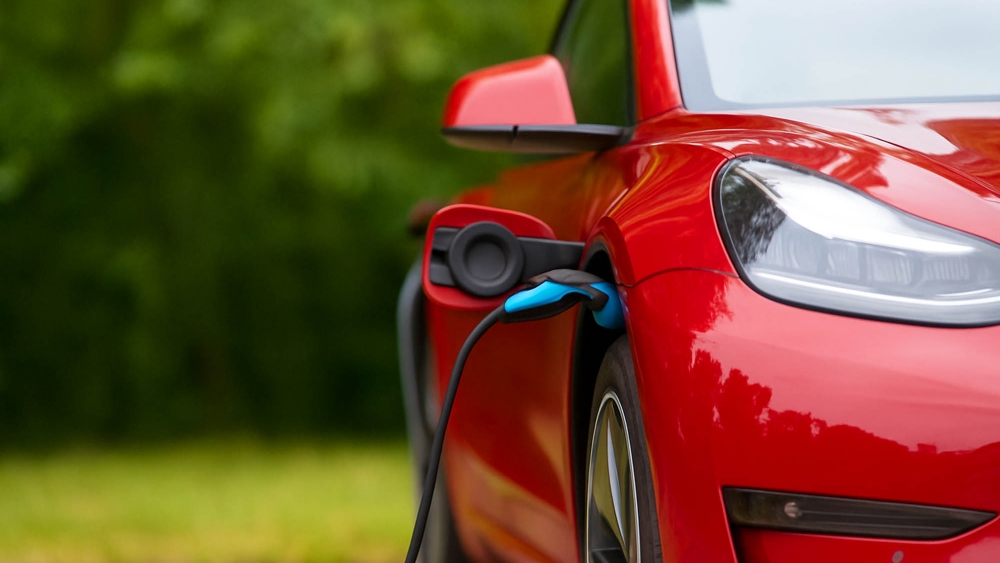
Real range, charging network, and price are more important than WLTP figures. A six-step guide to buying your first electric car without falling into the trap of promised mileage.
The arrival of electric cars has been accompanied by an avalanche of technical data, range figures, and promises of clean mobility that are not always understood or reflect the reality of the average user. For those considering making the leap for the first time, one of the factors that generates the most doubt is range: how many miles can the car actually travel on a single charge and whether that figure will be sufficient for their daily commute or longer journeys.
However, relying solely on the official range data (WLTP) can lead to wrong decisions. Real driving conditions, type of use, weather, and even driving style directly influence the distance an electric car can travel. In this context, learning to interpret this data wisely is key to choosing the right model, without overpaying or falling short out of fear.
You need to be clear about how many miles you drive per day and the car’s fuel consumption. Choosing your first electric car requires looking beyond the large range figure. Analyze your actual mileage, subtract the WLTP margin, study fuel consumption, check the charging network, and weigh up the price per kWh. Only then will you be able to avoid marketing hype and find the model that fits your lifestyle (and your budget) without unfounded fears. Before looking at technical specifications, review your routes. The average car in the US drives 17,700 miles/year, about 50 miles/day if distributed evenly. Even adding weekend getaways, most drivers will barely exceed 200 km between charges, a distance that any basic electric utility vehicle can cover today. Official figures are measured using the WLTP cycle, carried out in a laboratory at 23°C and without air conditioning. A study by the OCU on 31 models reveals that real-world range is usually 9%–22% lower (15% on average) than advertised. Assume that margin: a car that claims 400 km WLTP will offer around 320–350 km on the road, less if you drive fast or in cold weather. To find out if a car fits your routine, divide the usable battery capacity (kWh) by the WLTP consumption (kWh/100 km). This will give you the “mathematical” range without marketing. For example, 60 kWh/15 kWh × 100 = 400 km theoretical; subtracting 15% from the previous point, about 340 km practical. Also look at the torque and efficiency (kWh/100 km): consumption of around 13-14 kWh/100 km indicates an aerodynamic and lightweight car. Public access infrastructure is growing rapidly: as of April 2025, there were 46,358 operational points in Spain, 20% more than at the end of 2024. However, average usage is only 1.5 charges per day, indicating that saturation is a long way off. If you can install a 7.4 kW home wallbox, you can charge 300 km of range overnight for less than €5 (off-peak rate). Reserve 150-350 kW fast charging for trips: you will pay more (€0.45-0.69/kWh), but you will add 200 km in 20 minutes. Electric cars will most commonly be charged at home. Thanks to pressure from China and the MOVES III Plan, there are now electric cars available from €16,000, such as the BYD Dolphin Surf or the Citroën ë-C3, and best-selling models such as the Tesla Model 3 for less than €30,000 after subsidies. Ask yourself what you really need: All brands offer at least an 8-year or 160,000-km warranty for the battery, with a minimum capacity of 70% at the end of the period. Tesla or BYD’s LFP (lithium iron phosphate) cells suffer less degradation at 100% than NCM cells, although they weigh slightly more. When it comes to reselling, buyers will look at mileage, fast-charging history, and, above all, the battery health as indicated by the software.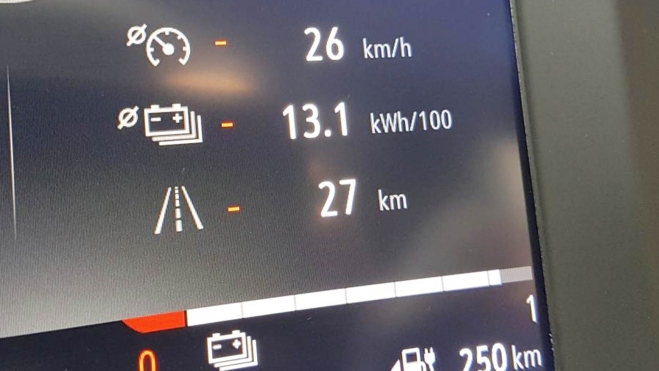
Quick guide to choosing the right electric car
Calculate how many miles you actually drive
Understand the difference between WLTP and real range
Compare consumption and battery capacity, not just kilometers
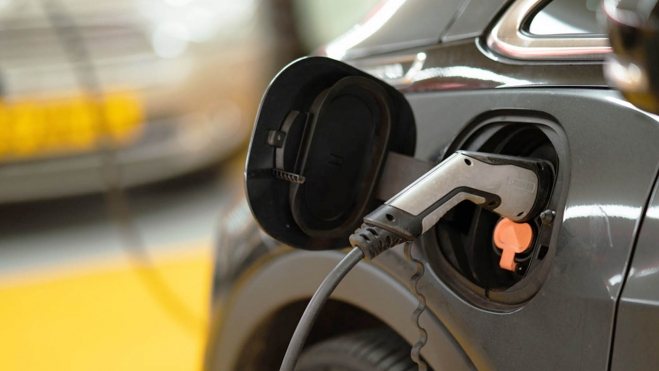
Consider where and how you are going to recharge
Adjust your budget and don’t get hung up on the big battery
Keep an eye on warranties, degradation, and resale
The price of the training is 250 euros.
The training is asynchronous online, you can do it at your own pace, whenever and from wherever you want, you set the schedule.
Classes are video recorded.
Start date: The training can be started whenever you want. Once payment is made, you have access to the training.
The training is in English, subtitles and syllabus avalaible.
Other subtitles and video syllabus available: Arabic, Chinese, French, German, Indonesian, Italian, Japanese, Korean, Persian, Portuguese, Russian, Spanish, Thai, Turkish, Vietnamese.
All syllabus has been developed by the teacher.
Fill out the following form to receive course information, or write an email to:
Contact.
- José Miguel Fernández Gómez.
- Email: info@advancedfleetmanagementconsulting.com
- Mobile phone: +34 678254874 Spain.
Course Features.
- The course is aimed at: managers, middle managers, fleet managers, any professional related to electric vehicles, and any company, organization, public administration that wants to switch to electric vehicles.
- Schedule: at your own pace, you set the schedule.
- Duration: 25 hours.
- Completion time: Once you have started the course you have 6 months to finish it.
- Materials: english slides and syllabus for each class in PDF.
- If you pass the course you get a certificate.
- Each class has a quiz to take.
- English language, subtitles and syllabus.
- Other subtitles and video syllabus available: Arabic, Chinese, French, German, Indonesian, Italian, Japanese, Korean, Persian, Portuguese, Russian, Spanish, Thai, Turkish, Vietnamese.
-
Start date: The course can be started whenever you want. Once payment is made, you have access to the course.
Price.
- 250 euros.
-
You can pay by bank transfer, credit card, or PayPal.
Goals.
- Know the most important aspects to take into account when electrifying a fleet of vehicles.
- Learn about electric vehicle technology.
- Know the polluting emissions that occur when a fleet of vehicles is electrified.
- Know what technologies are viable to electrify a fleet of vehicles.
- Learn about real cases of vehicle fleet electrification.
- Know the history of the electric vehicle.
Syllabus.
- History of electric vehicle.
- Battery electric vehicle.
- History of the lithium ion battery.
- Types of electric vehicle batteries.
- New electric vehicle battery materials.
- Other storage technologies of electric vehicle batteries.
- Battery components.
- Battery Management System-BMS.
- Fundamentals of the electric motor.
- Battery degradation loss of autonomy.
- What is covered and not covered by the electric vehicle battery warranty.
- Battery passport.
- Battery fire of the electric vehicle.
- Causes, stages and risks of battery fire.
- Real cases of electric vehicle fire.
- Electric vehicle battery fire extinguishment.
- Measures to prevent, extinguish and control electric vehicle fires.
- Fire safety regulations for electric vehicle batteries.
- Impact of ambient temperature on battery performance.
- Which emmits more Co2, an electric car or a car with an internal combustion engine.
- The use of rare earth earths in the electric vehicle.
- Plug-in electric hybrids, a solution or an obstacle to electrify the vehicle fleet?.
- Fleet electrification with hydrogen vehicles.
- Cybersecurity of charging points.
- The theft of copper in electric vehicle chargers.
- Incidents at electric car charging points and their possible solutions.
- Batery swapping.
- The tires of electric vehicles.
- Electric vehicle, artificial intelligence, and electricity demand.
- The case of Hertz electrification.
- The case of Huaneng: The world’s first electrified and autonomous mining fleet.
- Consequences on the vehicle fleet of an electric vehicle brand going bankruptcy.
- E-fuels and synthetic fuels are not an alternative to decarbonize the vehicle fleet.
- How to avoid premature obsolescence of the fleet’s electric vehicles.
- Polluting emissions from brakes.
- Mileage manipulation to extinguish warranty early on electric vehicles.
- The importance of the electricity tariff in reducing electric vehicle costs.
- Electric vehicles cause more motion sickness than gasoline vehicles.
Training teacher.
José Miguel Fernández Gómez is the manager of Advanced Fleet Management Consulting, a consulting company specialized in vehicle fleet management and the owner of the fleet management channel on YouTube AdvancedfleetmanagementTube.
Since 2007 I have been working in fleet management consultancy and training for all types of companies, organizations and public administrations. With this course I want to make my experience and knowledge acquired during my work and academic career in this discipline available to my clients.
I carry out consulting projects related to vehicle fleet management and collaborate with companies developing products/services in this market. I have worked at INSEAD (France), one of the best business schools in the world, as a Research Fellow at the Social Innovation Centre-Humanitarian Research Group.
I carried out consulting and research activities in a project for the United Nations refugee organization (UNHCR), optimizing the size and management of the activities of the vehicle fleet, which this organization has distributed throughout the world (6,500 vehicles).
I worked as a fleet manager for five years, for Urbaser, which managed the street cleaning service in Madrid (Spain). I managed a fleet of 1,000 vehicles, made up of various technologies and types of vehicles such as: heavy and light vehicles, vans, passenger cars or sweepers.
I have completed all my academic degrees at the Polytechnic University of Madrid, one of the best universities in Spain, my academic training is as follows:
I hold a PhD in Industrial Engineering, with international mention, since I carried out research stays at the University of Liverpool (UK) and at the Royal Institute of Technology-KTH (Sweden).
I am also an Industrial Engineer (Industrial Management) and an Mechanical Engineer, and I completed a Master’s Degree in Operations Management, Quality and Technological Innovation (Cepade) and another Master’s Degree in Industrial Management (UPM).
I have publications in indexed magazines and presentations at international industrial engineering conferences.
Cancellations and penalties.
Once the course has started, the amount will not be refunded.